Motorcycle, how to adapt your steering for a corner (Beginners)
This article focuses on how to adjust or update the motorcycle steering mid-turn using overly simplistic methods for beginner riders to visualise and practice.
Just as you start to trust and develop an understanding of how to reliably steer a motorcycle, you also need to a way to change the turning radius or direction of travel while riding a motorcycle during an existing turn manoeuvre.
The new rider really needs to practice how to steer and change your control input mid-turn so you have confidence to adjust your motorcycle for whatever corners or hazards you eventually encounter!
Some reasons are:
- Evade other vehicles!
- A corner tightens;
- Corner gets wider.
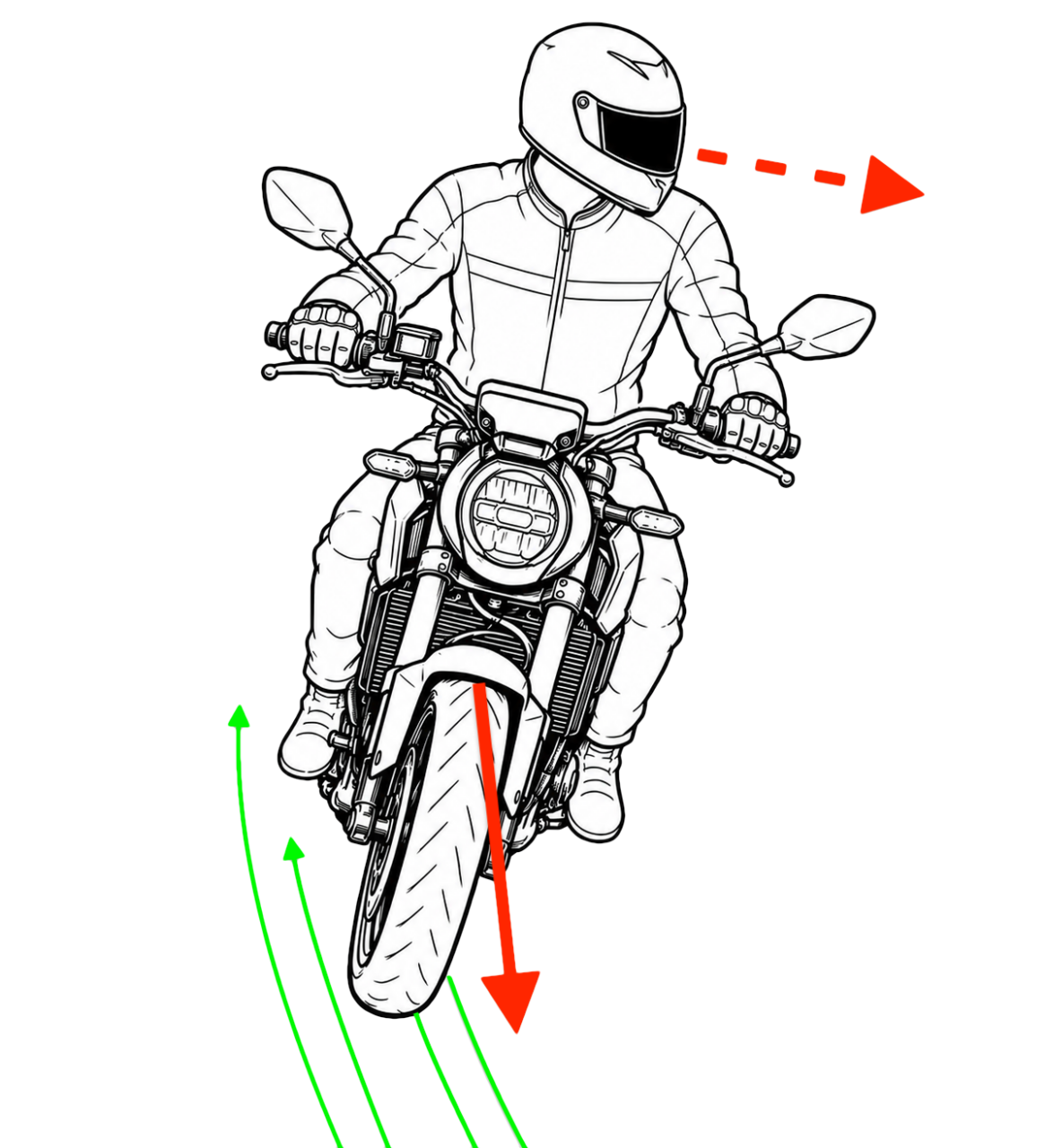
You can read the initial guide for a beginners introduction on how to steer a motorcycle.
Introduction to Counter-Steering on two wheels - Click here: https://motobasics.nz/knowledgebase-articles/guides/guide-motorcycle-steering
Introduction to a "Vanishing Point" - Click here: https://motobasics.nz/knowledgebase-articles/guides/guide-vanishing-point
1. Your turning radius is related to speed
Your speed has three (3) effects when turning.
1a, Increasing your speed.
- Widen your turning radius with the same steering input;
- Straightening up the path of travel with no steering input.
1b, Decreasing your speed.
- Shrink your turning radius with the same steering input;
- Assist with a change of direction (example, left to right turn);
- Scenario where you need to stop, straighten and upright the motorcycle before a complete stop (no longer turning).
1c, Keeping the same speed.
- One turning radius with the same steering input;
- Assist with a change of direction (example, left to right turn);
- Low speed u-turns, use the rear brake when needed to keep speed consistency.
With the knowledge you can widen or tighten a turn just with an adjustment of speed can help, but it is only one part of knowing how to change or adapt your turning while riding a motorcycle. See section 2, counter-steering further down.
When you enter a corner with smooth and controlled rider inputs, but mid way into the corner, you observe the vanishing point comes closer to you as a rider - That's a sign the corner ahead is about to tighten up more.
When the corner tightens, without any change to the existing steering input you have already provided, you can reduce your throttle input or lightly apply your brakes to reduce your speed (or do both actions) and the motorcycle will begin to turn in sharper as a result of the speed reduction.
What about corners that open up wide?
If you add some throttle to a widening or opening corner where your vanishing point is further away, the motorcycle turn radius will widen and if you keep accelerating, the motorcycle will straighten its path of travel without any steering input.
2. Counter-Steering input
You can add more counter-steering input allowing you to turn more, or, change direction entirely at the same speed you are traveling at.
2a, You can tighten the turn radius.
- By adding an additional counter-steering input into the existing turn. This makes the motorcycle lean further down using the tyre's curved profile more, this allows the motorcycle to turn even tighter.
2b, To change the motorcycles direction of travel.
- Add a counter-steer input into the opposite direction to get the motorcycle to lean onto the other side of the tyre to begin the next turn manoeuver.
Adding more steering input is the second part to knowing how to adjust motorcycle mid-turn.
- Avoid aggressive or exaggerated steering inputs, regardless of speed traveled.
- Excess speed will force a rider to steer the motorcycle aggressively to try and fix the situation where judgement does not match rider skill level, the motorcycle will be unsettled with sudden steering inputs and speed changes combined, the potential for a rider incident to occur is real;
- Being aggressive with speed while turning will upset the motorcycle's balance and suspension removing usable grip from the tyres when needed the most - Turning a motorcycle!
Steering and speed management work together
Typically most experienced riders use both techniques together, 1 (Speed management) and 2 (Steering input).
This is why a motorcycle can flow through corners and improve overall rider trust in motorcycle handling by using both techniques (1&2) smoothly.
Speed management removes the extreme risk of upsetting the motorcycle's suspension and tyres, adding the knowledge of how to add steering input allows you to turn a motorcycle more when a situation arises.
Being smooth with rider inputs on a motorcycle.
- Throttle control smoothness means more available traction for the front and rear tyres to work correctly, rain or sunshine!
- Brakes, being smooth and progressive with braking also helps the motorcycle's suspension and tyres do their job correctly.
- Speed management, knowing we have the best grip and motorcycle control when smooth inputs are used, our speed traveled should enable the rider's ability to keep using smooth controls for the whole journey.
Being aggressive on a motorcycle.
- Out riding the vanishing point due to excess speed (aka beyond your ability or general physics);
- Rear steps out or walks sideways, being too aggressive on the brakes when entering a turn;
- Front feels loose or slides, being too aggressive with throttle input while turning, additional risk of rear tyre sliding;
Being aggressive with rider inputs creates motorcycle incidents including high-side, low-side, related rider injuries and potentially harm to others while using public roads with excessive rider inputs, especially when turning a motorcycle.