Skip to content

Lane sharing (NZ)

Let's get started.

When conditions allow, lane sharing can reduce a motorcyclist’s delay in congested traffic.


The alternative to lane sharing is every motorcycle consuming 1.5x the length of a typical small car while queued in traffic.

How does a motorcycle consume more space?

Recommended 2x motorcycle lengths space buffer in front of the motorcycle and the motorcycle itself.


Technically, passing a vehicle in the same lane is:


“Lane Filtering” = Stationary or slow traffic.


“Lane Splitting” = Moving traffic.


For the purposes of this guide, anything related to a vehicle passing another vehicle in the same lane will be referred to as “Lane Sharing” to describe all activity related to sharing a lane.

Lane sharing action + knowledge how-to lane share safely provides benefits for motorcycle riders.
When to look at lane sharing?

If there are only a few cars at the front of the queue at any time at an intersection it is unlikely that lane sharing will save you any time over your journey and you won’t beat any traffic lights at the next intersection.

But if the traffic is backed up substantially, then lane sharing provides good time savings even at 10km/h vs stationary traffic queues.

Note:

Other vehicles may not appreciate a motorcyclist cutting to the front of the traffic queue. It is up to the rider to make safe decisions and adhere to the road rules.

Additionally, dash-cam footage is very common today - if lane sharing, do so respectfully.

Lane sharing has three main benefits. 

  1. Reduce road congestion;
  2. Motorcycle rider safety - sitting in traffic queues can be just as dangerous for motorcyclists due to rear end incidents that can occur;
  3. Motorcycle cooling, some motorcycles are air-cooled and motorcycle riders do not sit in air conditioning.

Fun Fact!

Lane sharing is not exclusive to motorcycles, but with the road rule of not obstructing other road users when performing lane sharing tasks you will find two wheeled vehicles are much slimmer than a delivery van - generally, lane sharing is associated with motorcycle use.

We generally don’t think about lane sharing as a specific task when on single lanes around the suburbs and low traffic areas.

But, we actually do lane share every time a vehicle needs leave your lane to enter a side road or vehicles parallel parking etc, you check mirrors, do head checks and pass vehicles on the left or right depending on the situation required.

Lane sharing - road rules

These road rules are not exclusive to motorcycles, it applies to all vehicles.

The primary caveat: Can lane sharing be done safely and without obstruction (ie courier van sharing the same lane side by side with other vehicles would be an obstruction).


Emergency vehicles with their sirens and lights on do effectively lane share as needed regardless of your obligation to yield and allowing them to pass.


Basically, if we take a single lane of traffic (regardless if multi-lane or single lane road where traffic is moving in one direction) there are moments when any vehicle can be passing on the left or right of any other vehicle in the same lane.

The lane is the area for moving vehicles is typically marked by solid white line (roadside/shoulder) and a dashed center line between lanes. 


Bicycle lanes, road shoulders and medians clearly marked are not part of the lane area for normal motor vehicle use so using these areas as a extra traffic lane is illegal unless you are crossing over these marked areas to enter a side street or premise with your turn signal showing.

Overtaking on the left of vehicles in the same lane.

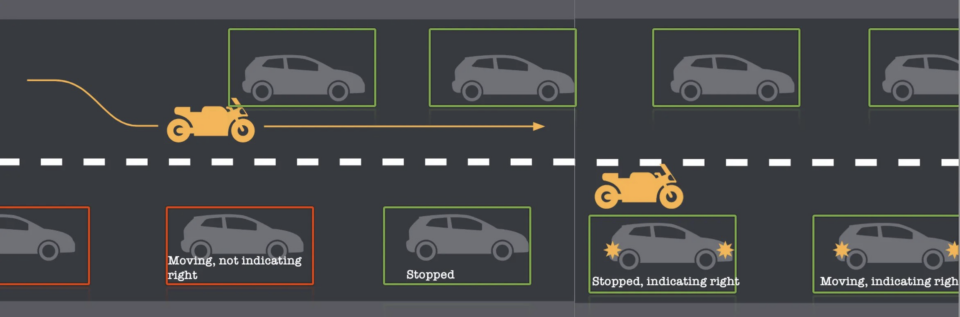
If any vehicle has a right turn signal showing (intention to be turning right), that vehicle may be stationary or moving and only then can another vehicle pass on the left of the that vehicle in the same lane and does not cause obstruction to other road users and can be done so safely.

If any vehicle is stationary in a lane, another vehicle may overtake on the left of that vehicle in the same lane and does not cause obstruction to other road users and can be done so safely.

It is illegal to overtake another vehicle on the left side in the same lane if that vehicle is moving and not indicating right.

Overtaking on the right side of vehicles in the same lane.

Vehicles moving or stationary, you may over take on the right of vehicles in the same lane where it can be done so safely.

Stopping on pedestrian crossings.

It is an illegal manoeuvre to stop on a pedestrian crossing.

Lane sharing advisory

Speed management while performing lane sharing activities.

A general advisory is not to be progressing more than 15km/h faster than the traffic you are lane sharing with. This is known as the "Speed Delta", this is the speed difference between your vehicle and other vehicles. See the Traffic Survival Guide - click here.


The road code states you may lane share up the posted speed limit but this is the cater to many common speed zones and anything over 30km/h is not going to shorten your journey time significantly plus all the additional risks added when traveling at faster speeds - i.e. can it be done safely with higher speeds, unlikely.


You are likely to gain the attention of police when lane sharing with aggression or poor road manners regardless of speed limits. Infringement notices for poor vehicle usage that may imposing or inconvenience other road users - dangerous use of a vehicle can been issued.

We like the benefit of lane sharing, but we want to keep that ability and being respectful to other road users will help keep lane sharing as an available option.

Ride Forever illustration of lane sharing modified by Moto Basics - Green boxes around vehicles show correct lane sharing positioning.
Lane sharing examples - left side of vehicles in the same lane

Overtaking on the left side of stationary vehicles.
The vehicles are not signalling right, but are stationary, you may over take on the left of vehicles in the same lane if it can be done safely.

As our motorcycle wheels are in the right lane, we are lane sharing the right lane out of two (2) lanes so we are overtaking on the left side of vehicles in the same lane.

Lane sharing the right lane, passing on the left side of stationary vehicles.

Overtaking on the left side of moving vehicles not showing a right turn signal.

The vehicles shown are not signalling right and also moving forward, this makes it an illegal manoeuvre to over-take on the left side of another vehicle in the same lane. 

However, if a vehicle was signalling right, you may legally pass a moving vehicle on the left side in the same lane if it can be done safely.

As our motorcycle wheels are in the right lane, we are lane sharing the right lane out of two (2) lanes so we are overtaking on the left side of vehicles in the same lane.

!! Some motorcycles use the road shoulder to progress ahead of queued traffic, this is the most dangerous positioning for any motorcycle rider.

  • Over taking on any side of other vehicles outside of the road lane area is illegal.
  • Any road shoulder, median or cycle lane cannot be crossed over unless you are signalling to turn and exit the road lane entirely, ie parking, driveway or intersection.
  • It is not the other vehicles fault if any incident occurs when the motorcycle rider is in the wrong place when using road shoulders or cycle lanes illegally.
  • Vehicles may suddenly pull to the road shoulder for any number of reasons including mobile phone calls, children, accidents etc.
Lane sharing the right lane, passing on left side of moving vehicles that are not signalling a right turn.
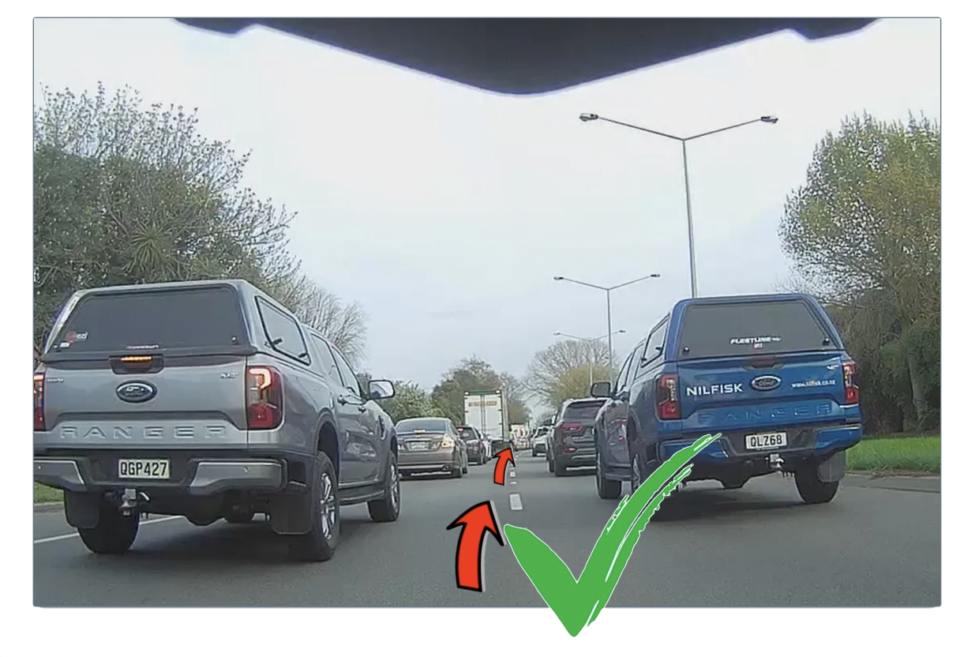
Lane sharing - right side of vehicles in the same lane

Overtaking on the right side of other vehicles.

Vehicles moving forward or stationary in the same lane, you may over take on the right of vehicles at this time in the same lane if it can be done safely.

As our motorcycle wheels are in the left lane, we are lane sharing the left lane out of two (2) lanes so we are overtaking on the right side of vehicles in the same lane.


Lane sharing the right lane, passing on the left side of stationary vehicles.
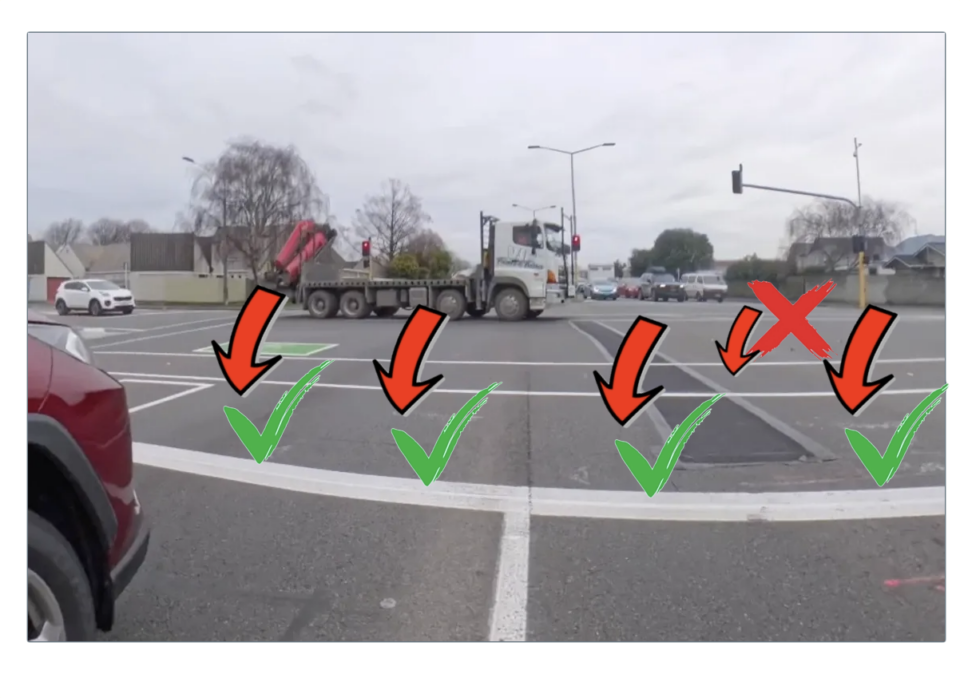
Pedestrian crossings and stopping at the front of traffic queues.
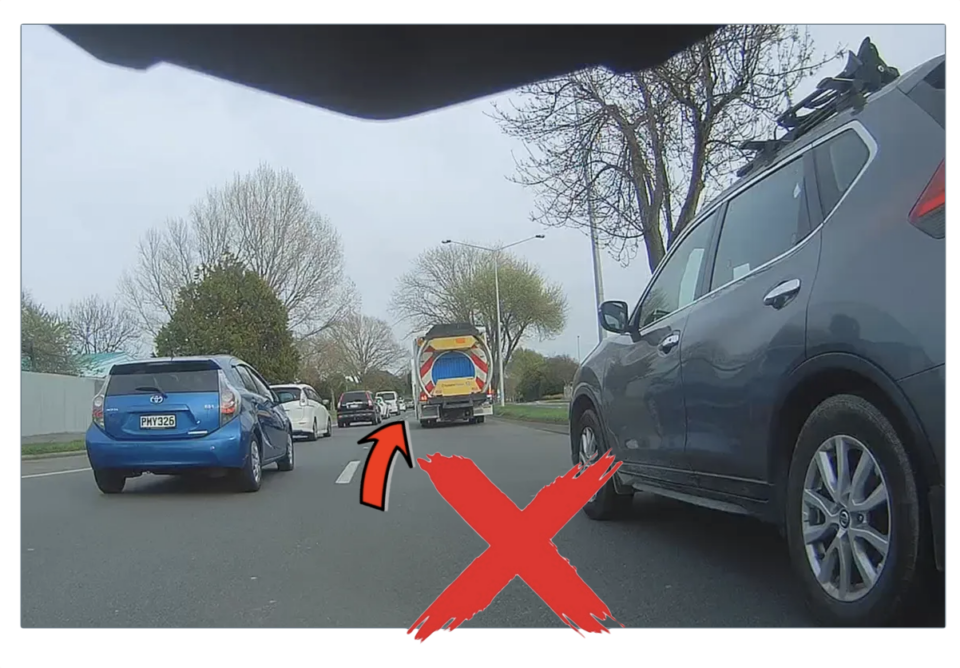
Do not stop on a pedestrian crossing - shown with a red X in the image.

If there is room before the pedestrian crossing marked and in front of the queued traffic you can stop here - shown with green ticks.

Otherwise, it is best practice to stagger the vehicles so you are better seen while sharing a lane. 

If more than one motorcycle has progressed to the front of the traffic queue and there is no room to share up front, then revert to staggering other vehicles till lane merge allowed.


If you stall or drop a motorcycle after getting to the front of the traffic queue, you have then inconvenienced the flow of traffic.

Leave your motorcycle in first gear so you may leave promptly when it is safe to do so, don't be holding up the traffic queue after you moved in front of it.

Check for traffic before entering any intersection - green lights do not guarantee safe passage!

Lane sharing - stopping at the front of traffic queues.

Traffic lights changed before you reach the traffic queue front?

If the lights changed from Red to Green before you reach the front of the traffic queue,

OR…

What if there is a queue of motorcycles already present when commuting? 


This is the right time to stagger the vehicles around you instead of creating a wheel-to-wheel motorcycle queue, someone may stall or make an error.


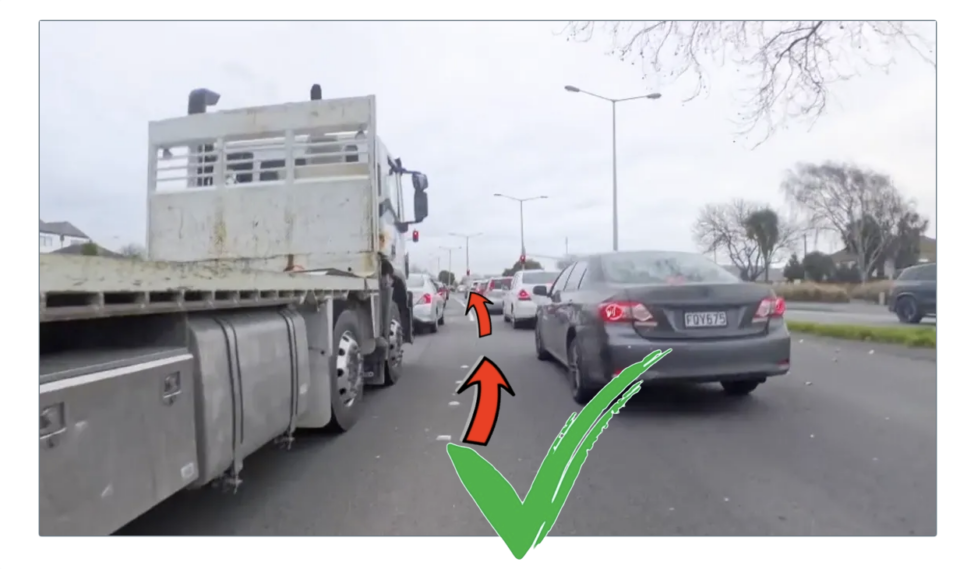
It is safer to stagger between other vehicles and remain staggered between vehicles until free space allows you to merge with traffic or keep lane sharing if safe to do so.

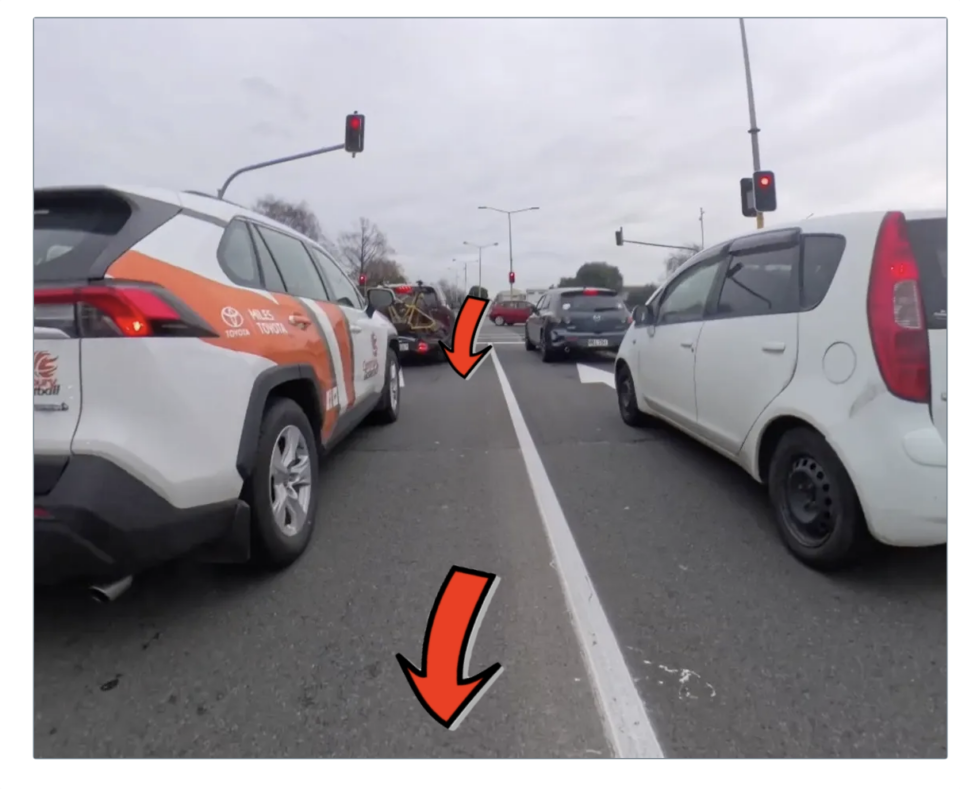
The red arrows show where it is safest to stop or slow while lane sharing if you cannot reach the front of the traffic queue.

  • The gaps between vehicles allow the motorcycle to be seen easily.
  • This allows vehicles in front of you to see your head light in side view mirrors and vehicles behind can see you clearly.
  • Do not cut in front of other vehicles, doing so can create a situation where a incident may occur between your motorcycle and another vehicle.
Lane sharing - stagger between vehicles when you cannot merge or progress.
Lane changing

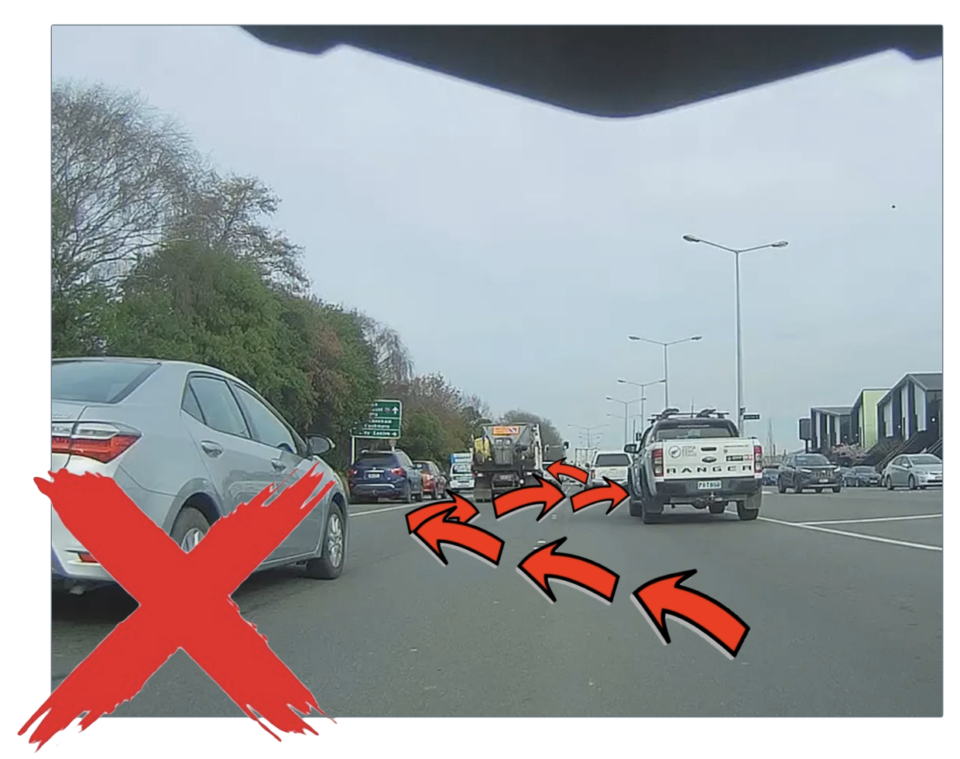
There is no issue changing lanes for better traffic positioning but it is best to remain near the center line separating the lanes.

If you cross lanes “Zig Zagging” you are invisible to most other vehicles except for the few seconds when you cross the center line.

It is actually annoying to other road users, the chances of being hit my another vehicle increase due to the poor road positioning that is caused by zig zagging or swinging between lanes.

If you remain in the position either just left or right of the lane center line where multiple lanes are in use, you are more likely to remain visible to surrounding vehicles.

Don’t forget, many vehicles are typically your “traffic neighbours”, you might see them over and over again every few days on your daily commute so if you annoy them, they will likely try and annoy you with poor vehicle positioning aka “blocking” and potentially some aggressive behaviour towards you or any other motorcyclist. (It happens!)


“Loud pipes save lives” - exhaust noise does not make lane sharing safer.

In fact, aggressive road users can hear loud pipes well before you arrive and may attempt to make lane sharing unsafe for the motorcycle rider.

Positional awareness and vehicle control is safer than loud pipes, there is no argument. 


Road code states you are not to purposefully inconvenience other road users, this includes knocking mirrors or scaring people with aggressive riding or behaviour.


This applies to all road users regardless of lane sharing activities.

Lane sharing - avoid zig-zagging across lanes, you actually become more invisible to other road users. 
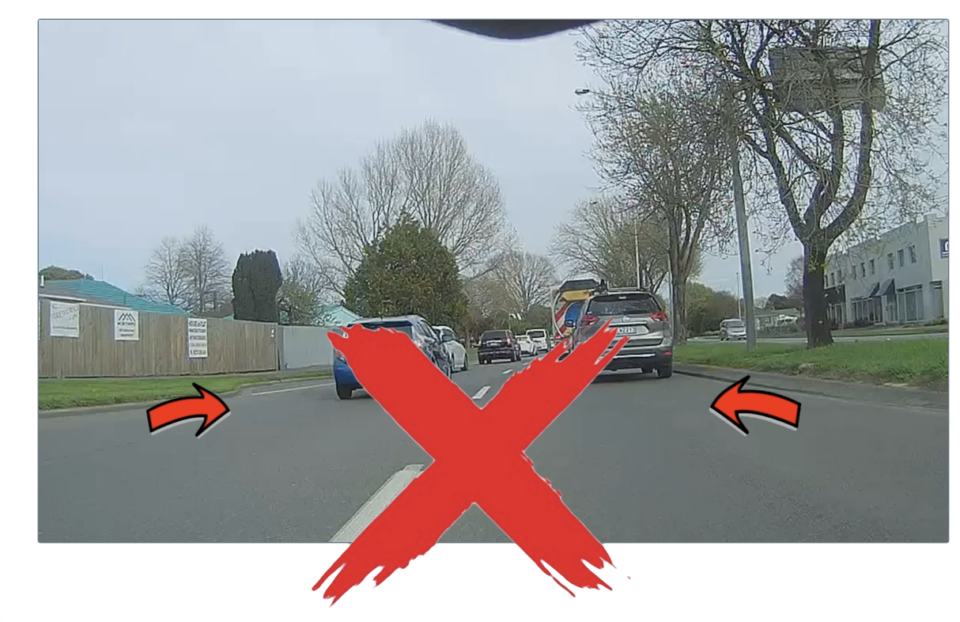
Lane positioning

Common sense applies when going in a straight line in your lane.

Follow the 2-4 second rule when following other vehicles in the same lane so you have room to brake and move your motorcycle when you need a exit path.

This also gives you time as the motorcycle rider for head checks and mirror checks - Following to close to the vehicle ahead consumes attention and reduces time to scan and plan.

Don’t sit on the left road shoulder like cyclist does or be too close to traffic islands or opposing traffic, this is where you can be trapped with no exit path. 

This highlights good reasons not to purposely lane share on single lane roads (ie residential roads) with moving vehicles as they are not expecting a motorcycle on any side of their vehicle and the motorcycle will end up being trapped or clipping a vehicle or road object like a roadside or traffic island.

Just because you “can” doesn’t mean you should as it will most likely not be able to be done in a safe manner on single lane roads.

Other vehicles may not be so observant of their own vehicle positioning or could be aggressive towards other road users and if you do not control your portion of the lane with good lane positioning you may end up in an awkward or dangerous situation.

So by positioning in the middle of single lanes and nearer the center line on multi-lane roads you can been seen sooner by other vehicles or evade a situation by being ready to lane share if needed.

Lane usage, stay away from roadsides and traffic islands.
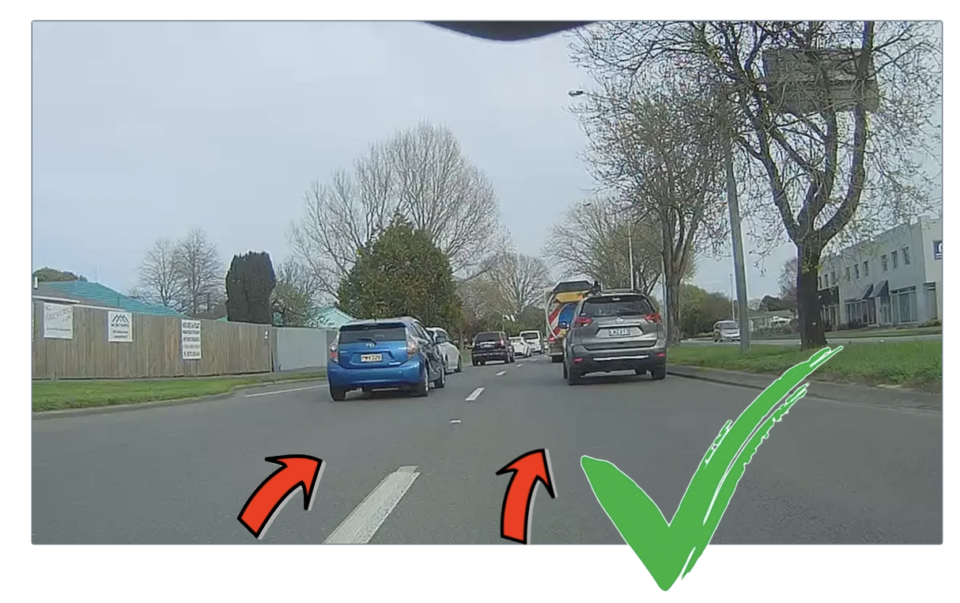
Lane usage, use the 2-4 second rule when following vehicles in your lane and be visible by positioning as shown by the red arrows.


The complete index for guides can be found here:

https://motobasics.nz/knowledgebase-articles