Bicycle vs motorcycle differences?
I’ve ridden on two wheels for years on a bicycle, so what’s the difference between a bicycle and a motorcycle?
Two main differences:
a) When bicycles freewheel ie not being peddled under power - this is only for bicycles, do not ride motorcycles in this way!
b) Do not cover the motorcycle handlebar levers with your fingers when you are not using them, if you do not remove idle fingers you will find it much harder to learn effective control of a motorcycle.
Your brain has to re-align hand movements and this is the simplest way to prevent mistakes, the left lever is not a brake lever but the clutch lever and treating it like a brake lever due to bicycle habits will cause accidents for learner riders.
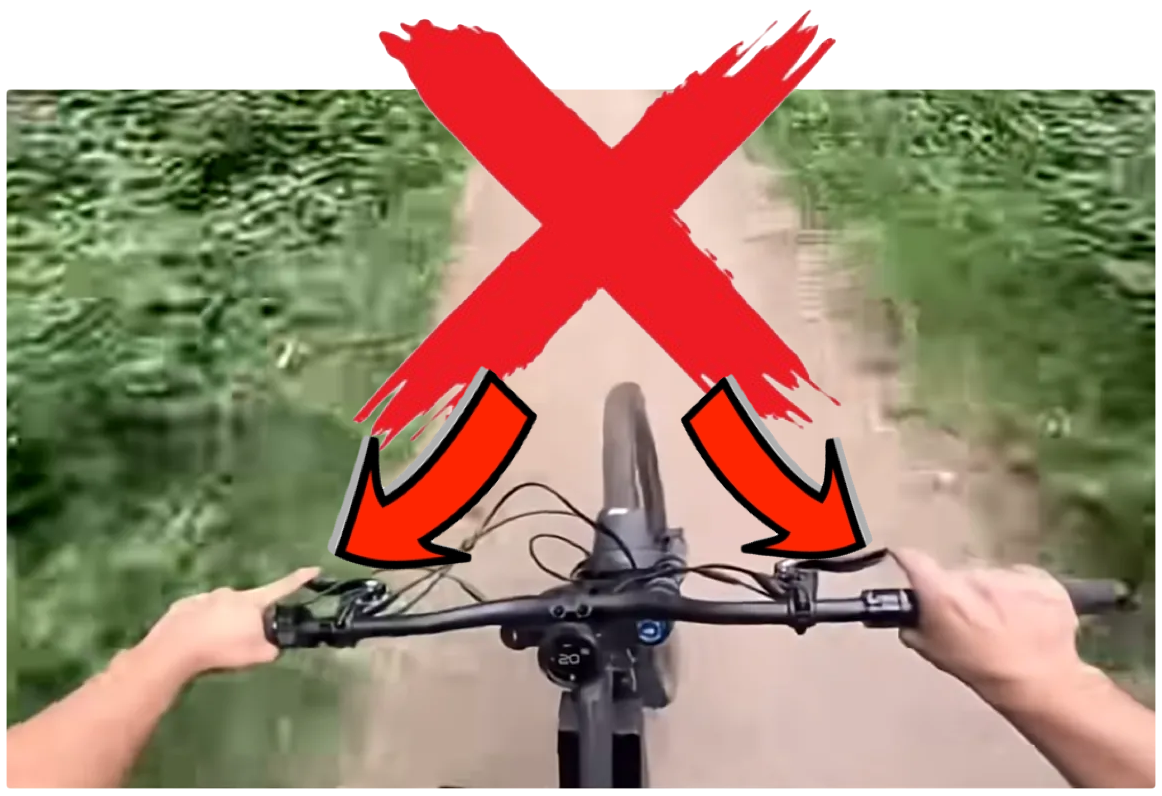
I feel safer covering the handlebar levers with my fingers?
Covering the motorcycle's control levers will setup learner motorcycle riders for errors, and possibly injury.
When using a motorcycle, riders trying to cover the brake lever while using the throttle execute poor throttle control.
This is most obvious when motorcycle riders enter and travel through corners, riders covering control levers are often slower and hitting "rider ability" limits as a direct result of poor throttle control.
It is most important to have smooth throttle control and when not using the throttle you will then roll off the throttle and only then use the brake lever. You do not need to cover the clutch lever unless changing gears, stopping or starting from a stand still.
Off-road riding and slow speed control tasks use the clutch friction zone - this is using the clutch, not covering the clutch!
Doing proper road positioning, scanning the road ahead and checking mirrors regularly + no tailgating other vehicles (keeping the 2-4 seconds following rule) solves many issues and gives plenty of time to slow, position and apply without "Spiderman Reflex" fingers on any control levers.
1. Motorcycle steering requires more input
When you ride a bicycle, steering feels light and more direct.
Bicycles still have a counter-steering effect but the human body weight is the larger weight mass and thus using body weight while leaning into corners is a very effective method to get the bicycle onto the tyre’s sidewall to complete a corner.
However, when you steer a motorcycle as it is heavier than the rider (generally speaking!) plus the added gyroscopic effects of the moving wheels and engine component inertia you need more steering input to corner and so counter-steering goes from a hardly felt “mystery” effect on a bicycle into a major part of the managing the vehicle’s handling when using a motorcycle.
2. Motorcycles have engine torque
When a bicycle rider stops peddling, you are essentially free wheeling. You can be resting, slowing down or going down a hill and gravity does all the work for you (it gives and it taketh away if peddling up hill!)
Motorcycles and their engines constantly push the rider, it’s a never ending tail wind.
But due to the weight of a motorcycle, it is the engine's torque and the forward motive power that actually keeps the stability of the motorcycle when traveling. Just a fact of life due to the vehicle mass.
You cannot just cruise free wheeling around corners and other situations on a motorcycle, the engine torque and throttle control is part of steering control and the stability in corners, even downhills (and uphills).
3. Motorcycles have a clutch
When a bicycle rider stops peddling, the power delivery is in effect “neutral” and free wheels.
When a motorcycle is used, neutral is only used when at complete stops or changing gears by using the cutch lever.
The clutch is the single most important thing about motorcycles above speed, corners, etc… If you fail to understand the clutch’s role and when it should be used then you are creating more risk to yourself and other vehicles.
Disengaging the engine power (in neutral) to the rear wheel when moving through corners and other general use cases actually destabilises the motorcycle handling as it is no longer under motive power.
4. Vehicle positioning
Many bicycle riders are used to riding on the road shoulders or sides and while cyclists may have better than car driver awareness about their own surroundings for survival purposes, it’s no place for a motorcycle.
The motorcycle rides on the road lane with other vehicles, obviously motorcycles are just as fast as cars and an interesting aspect of this road position is it does lesson rate of punctures and road debris found by motorcycle riders.
Riders obtain a licence to be using a road registered vehicle and all the responsibilities that come with it.
Some would say high powered e-bikes and scooters should not be on the road shoulder or side due to the speeds matching traffic in the lane next to them… That would imply they should get road registration and insurance to operate those vehicles at those speeds to use the roads like other road registered vehicles and incur the responsibility for operating those vehicles correctly.
(Going the same speed as a car while using a bicycle lane or road shoulder is a risk to yourself, and shows a lack of responsibility or awareness for other road users!)
5. Rider vision
A bicycle rider only needs to look as far ahead as the time it takes to complete a section of road at a specific speed, this may take a longer time at 30km/h than at 100km/h so cyclists tend to look at the road right in front of them just ahead of their front wheel instead of the vanishing point down the road ahead as they are the engine, peddling away and resting upper body on the handle bars!
A motorcycle operates over a various range of speeds like a car does and if the cyclist’s habit of looking down at the road in front of a motorcycle’s front wheel was used, you would not have time to plan any road positioning and potentially cause a accident.
6. Rider position
A bicycle rider while peddling away tends to be resting the upper body on the handle bars!
A motorcycle rider should have no weight resting on their wrists while holding the handlebar, motorcyclists use their legs to grip the petrol tank or body work of the motorcycle and the upper body is then free to control the motorcycle and improve vision.
More specifically, a motorcycle rider must be looking for the road ahead and its vanishing point.
The vanishing point determines the amount of braking distance available and items like corners in the road, other vehicles and obstacles on or near the road-side blocking a riders line of sight brings the vanishing point closer to the rider and the rider's speed needs to adjust for the reduced braking area for the vanishing point distance being observed.
See the guide on vanishing points here: https://motobasics.nz/knowledgebase-articles/guides/guide-vanishing-point