Skip to content

Parking your motorcycle (Beginners)

Let's get started.

This article has a list of things you need to think about when you park your motorcycle anywhere.

It doesn't matter whether you are parked on a flat road or a steep driveway - using the motorcycle's gearbox as a parking brake will make life easier on two wheels.

This article covers:

  • Choosing where to stop, basic observations;
  • Turn-back parking on roadsides;
  • Parking in car parks;
  • Parking in motorcycle parks;
  • Parking uphill;
  • Parking downhill;
  • parking security.

How to park summary:

You can put the motorcycle's gearbox into neutral for any maintenance tasks or to warm up the motorcycle engine when parked on level surfaces, but for all unattended parking, leave the motorcycle parked in gear!

You will save yourself some embarrassment, motorcycle scratches and dents by keeping your bike upright on two wheels!

Turn-backs only work when on level surfaces or the parking spot allows you to easily move the motorcycle backwards. If you ride forward into a parking spot, only do so if you are confident you can push the motorcycle back out of that parking spot.

If you are facing downhill, leave enough room in front of your parking spot to roll forward and turn out or do a 3 point turn out of your parking spot as it will be almost impossible to push a motorcycle backwards out of a steep driveway by yourself!

Quick questions the rider should ask themselves:

  • Is the ground firm enough to support the side stand?
  • Is the motorcycle stable and leaning securely onto the stand?
  • Is the motorcycle gearbox in 1st gear acting as a hand brake?
  • Is the parking spot clear of pedestrian routes, traffic and vehicle access?
  • Can you leave the parking space safely without needing to push the motorcycle uphill?

See the YouTube #406 playlist for video demonstrations parking a motorcycle.
Flat roads, inclines, facing up and downhill.

Choosing where to stop, basic observations

Check the surface before stopping.

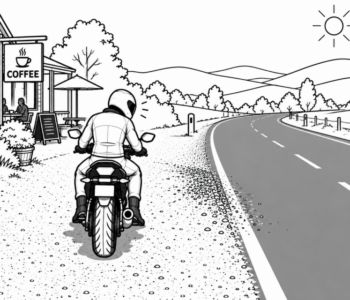
As you slow down to stop and park your motorcycle, check the road surface or the ground at your intended stopping place, including at fuel stations.

  • Loose material:
    Look for loose shingle or gravel. If your feet land on loose material as you come to a stop, they may lose traction, making it harder to keep the motorcycle upright.
  • Debris and sharp objects:
    Look for objects that could puncture your tyres, such as screws and nails. Debris can fall from trailers, vehicles and tool belts, and accumulate along roadsides.
  • Fuel spills:
    At petrol stations, look for fuel spills near the pumps. Fuel on the ground can make your boots slippery when you dismount or remount. Fuel residue on your boot soles can also reduce your grip on the foot pegs.
Plan to stop, patch of loose stones observed.
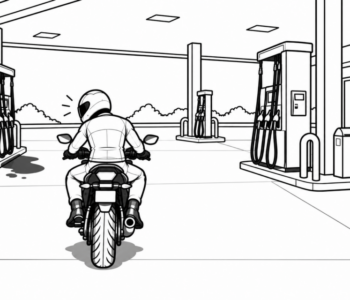
Plan to stop, patch of fuel sitting next to a fuel pump observed.
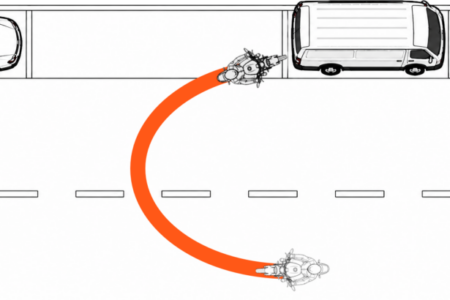
Allow room to straighten your motorcycle before coming to a complete stop.

Unlike a four-wheeled vehicle, a motorcycle needs to be upright and balanced to remain stable when stationary. When turning, the motorcycle and rider lean to maintain the turn, making a sudden stop more difficult to control.

If you are performing a U-turn and know you will need to stop at the end, plan ahead and leave enough space to finish the turn and bring the motorcycle upright before stopping.

Why this matters:
If you run out of room and have to stop while the motorcycle is still turning, it may remain leaned over. As the motorcycle slows and the suspension responds to braking and weight transfer, keeping the bike upright becomes more difficult and there is potential for the motorcycle to tip over when stopping mid-turn.

Allowing room to straighten first helps you stop in a more stable, controlled position.

Doing a u-turn without space to straighten.
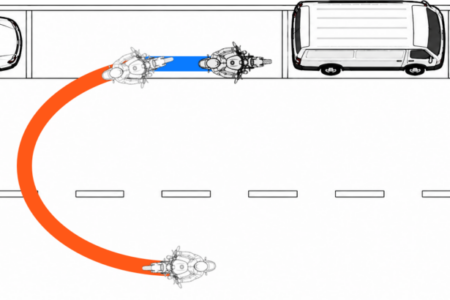
Doing a u-turn, allow space to straighten.
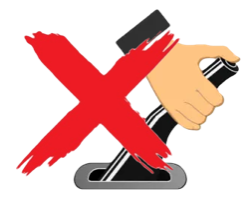
Four (4) good reasons to always leave your motorcycle in gear when parked

  1. There is no hand-brake (Parking brake).
    Well not entirely true, some touring motorcycles do have park brakes and even a reverse gear but 99% of motorcycles do not have a park brake.
  2. What if the motorcycle is on an incline like a hill or steep driveway?

    Leaving it in gear prevents the motorcycle rolling anywhere once parked as the side stand itself won’t prevent the effect of gravity when you are parked - leave the gearbox in 1st gear!
  3. Prevent accidental knocks that could push your motorcycle forward off the side stand.

    Another car parking too close nudges a wheel or a friend resting his body weight on the seat, the motorcycle could roll forward with the external movement applied and the motorcycle may tip over as the side stand cannot stop forward movement by itself -  leave the gearbox in 1st gear!
  4. Wearing heavy motorcycle gear.

    You can’t always get a leg over the motorcycle when wearing thicker trousers or added gear or with luggage attached to the motorcycle and if you kick your motorcycle instead of mounting it normally when your motorcycle is parked while the gearbox is in neutral, you may have just moved the motorcycle off the side stand - leave the gearbox in 1st gear while parked!

Parking on level surfaces

Why do a turn-back when parking and not parallel park with the road side? 


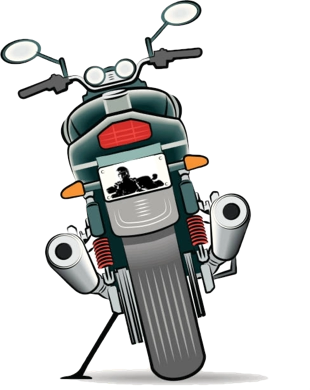
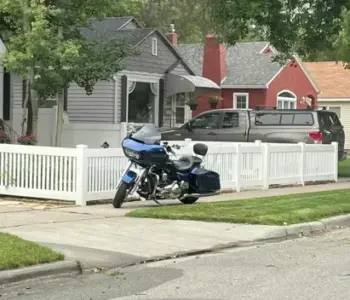
Most importantly, it is the exit strategy plus a few extra benefits when parking at approximately 90 degrees with the rear wheel nearest the roadside - image 1 and 2.

  • See traffic and exit going across the road and turn right or turn left, no u-turn needed.
  • Park in spaces only motorcycles can.
  • Park more motorcycles in the same space otherwise wasted on parallel parking.
  • Optimal side stand lean angle, try a parallel parking near some roadsides and it will feel like quite a long way down to have the motorcycle leaning on the side stand while parked. 
  • Leave room for other vehicles to manoeuvre around you otherwise vehicles could hit your motorcycle if you do not allow a space buffer.

Repeat to yourself - park the motorcycle leaving it in 1st gear!

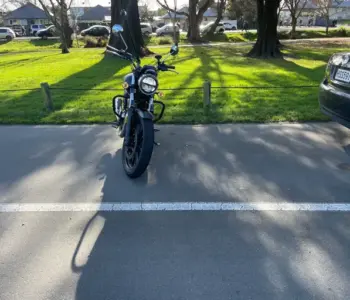
Image 1, basic turn-back parking on the roadside.
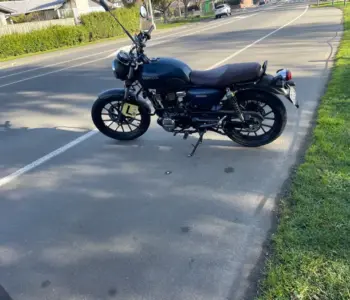
Image 2, basic turn-back parking on the roadside.
Where not to park a motorcycle

Often we see an empty paved area that screams “Park on me”  

You should refrain parking a motorcycle near: 


  • Pedestrian walking corridors and crossings - see image 3;
  • Main doorways and vehicle exits;
  • And other areas like marked stripes next to a marked for disability parking spots - that area is for their car doors to swing open wide as they need that room to enter and exit their vehicles - see image 4.

Considerate parking helps maintain goodwill towards motorcyclists and keeps shared spaces accessible for future use.

If we all start parking “in the way’ it comes back as bad karma eventually. Just because it can be done, doesn't mean it should be done.

Choose a spot that won’t upset others, the last thing you want is a new Karen dent or a Ken scratch on your motorcycle!

Image 3, parking on pedestrian walkways.
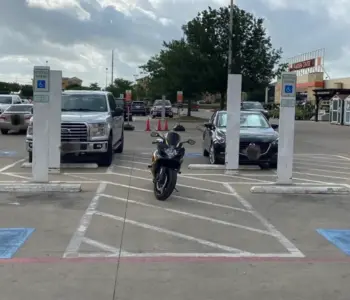
Image 4, parking in disabled access areas.
Parking in car parks

A few things to watch out for when using public car parks.

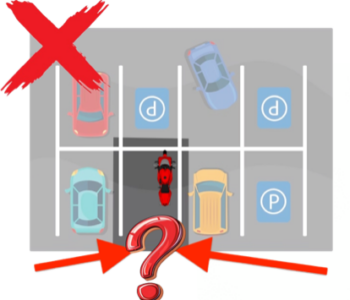
Don’t park at the deep end of a car park when you are by yourself - one motorcycle.


  • When using a car park, don’t position your motorcycle at the deep end of your carpark as other drivers may not see your motorcycle and could turn into the parking space and hit your motorcycle. 
  • Potentially, the other vehicle will drive off when there are no witnesses are around to address the event and you will come out one day to a tipped or dented motorcycle!


Park closest to the entrance of your car park spot. 


  • Your motorcycle will be seen clearly by vehicles passing through the driveway area - see images 6, 7 and 8.
  • Do a turn back into the parking spot, makes it much simpler to see other vehicles when you are leaving the parking spot. 
  • Reversing a motorcycle out of a carpark by foot into a busy car parking lane is not ideal and potentially unsafe!
Image 5, parking at the deep end of a car park.
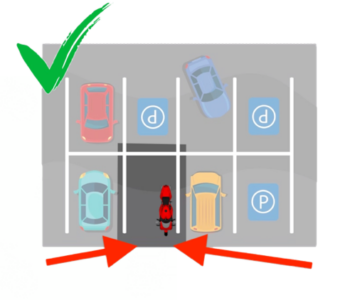
Image 6, parking at the entrance of the car park.
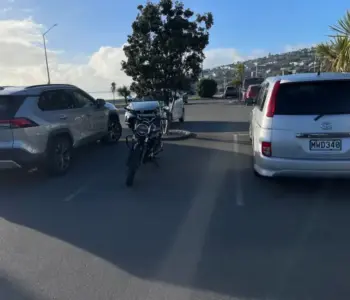
Image 7, Parking at the entrance of the car park.
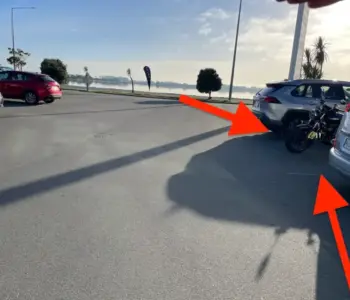
Image 8, seen at the entrance of car park.
Parking in car parks, added bonus

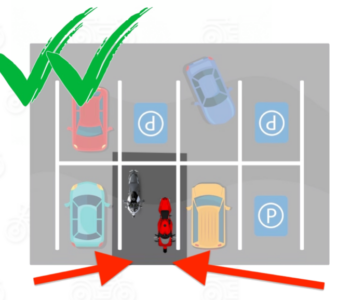
Park over to one side of the car park and a second motorcycle can then share the same car park.


That's four (4) wheels just like a car - see image 9.

Some parking spaces can fit four motorcycles, now we're talking about the number of wheels you might find on a bus or truck - an excellent utilisation of a parking space.

If you don’t want to share the parking space with anyone else, park right in the middle of the parking space entrance.

Sometimes, it is not nice being jammed in by others, that's why whomever parks first parks their motorcycle at the entrance point of the car park to be seen by other vehicles, and leave the car park easily.

If another motorcycle arrives later on, they can park behind you to the other side of the same car park.

Please share parking space respectfully.

Image 9, two (2) motorcycles in the same car park.
Motorcycle specific parking

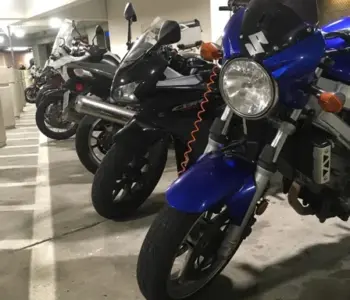
Similar to parking a motorcycle in a carpark, share the space and leave room for others.

Please park so your motorcycle is leaning in the same direction as other motorcycles.

More parking space is consumed when motorcycles are leaning in opposite directions to each other. 

Image 10, parking building spots for motorcycles.
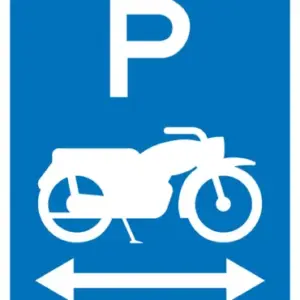
Image 11, motorcycle parking only sign.
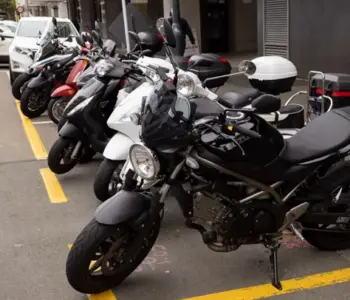
Image 12, outdoor motorcycle parking.
Parking on soft surfaces

One day you will have to put your side stand down on soft soil or deep shingle.


Where possible, motorcyclists generally choose solid ground for putting a side stand on the ground but that is not always possible.

Getting off the motorcycle might be easy at first but after a while the weight of the motorcycle may press deeper into soft ground and could fall over before, or when you climb back on your motorcycle.

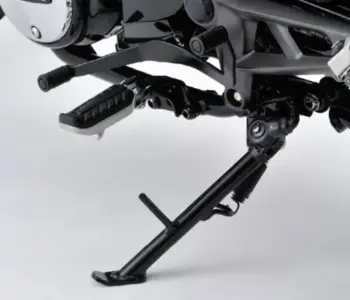
Main reason being the side stand is typically has a small foot on its end and much of the motorcycle’s weight rests on this small single point along with two wheels for balance - a tripod!

By simply adding a side-stand puck or wide pad area for the side stand to sit on when parked, the motorcycle will not push into soft surfaces so easily.


Carry a side-stand puck with you and attach a length of string so you can pull it back up once you're sitting on the motorcycle.


Remember, you can’t get back off the motorcycle to pick it up without putting the side stand down again!

Image 13, standard motorcycle side stand down.
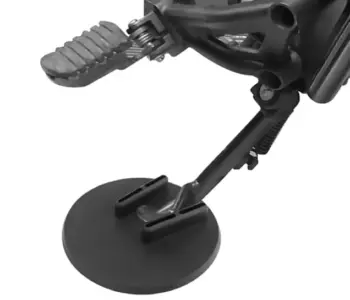
Image 14, side stand sitting on surface puck - improves surface area on soft areas.

Image 15, typical side stand puck, attach a length of string to it so you can pull it up once on the motorcycle.
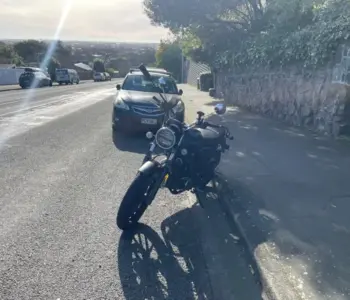
Parking on inclines - Facing uphill

Parking uphill.


Typically on a level road, motorcycles will do a turn back manoeuvre with the back wheel near the roadside and the front wheel towards the traffic lane - depending how wide the road is, you should be parked no wider than a parallel parked car!

Parking like you are on a level road while on a hill or incline could mean your side stand once down may be level with or higher than your motorcycle wheels and will not function as expected, the motorcycle will not lean onto the side stand!

Leave the motorcycle gearbox in gear to act as a hand brake while parked.

Depending on the steepness of the hill and the curvature of the road towards the roadside, you will tend to park the motorcycle between a 30 to 60 degree angle facing up hill from the road side with the front wheel towards the traffic lane - see images 16, 17, 18.

The steeper a road gets, the closer you will get to parking near parallel with the roadside.

Image 16, parking uphill, turn-back to the roadside.
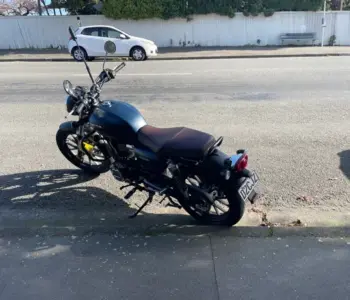
Image 17, parking uphill, view from roadside.
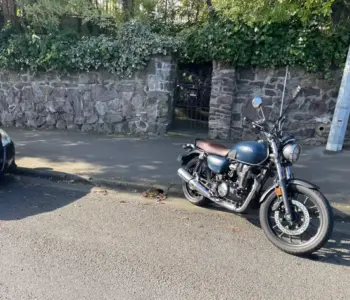
Image 18, parking uphill, view from street.
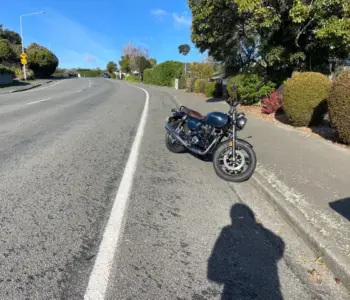
Leave a parking spot while facing uphill.

Use the front brake to hold the motorcycle on the slope as-is before you pull the clutch lever as we used the gearbox as a parking brake.

Then use the back brake once the side stand is up to hold the motorcycle as-is allowing you to release the front brake so you can use the throttle.

Use the clutch friction zone to pull out of the parking spot, release the back brake pressure as you begin to move forward - Rear brake prevents you from rolling backwards!

See guide on not stalling here: https://motobasics.nz/knowledgebase-articles/guides/guide-prevent-stalling

See the YouTube demonstration for visual reference.

Parking on inclines - Facing downhill

Parking downhill.

In general, it is advised to be parking uphill on the other side of the road but that is not always possible.

When you park facing downhill, you cannot put the back wheel to the roadside as doing so will put the side stand facing on the downhill side and implies you're able to push a motorcycle backwards uphill!

The front wheel is positioned near the roadside and your rear wheel facing up and towards the traffic lane - see images 19, 20, 21.

Leave the motorcycle gearbox in gear to act as a hand brake while parked.

The trick here is to not park too close to the roadside if you are parking and facing downwards, leave 20-50cm from the roadside so you can turn your handlebar so to exit the parking position - ie a half u-turn - and you really need a good 2 bike lengths of free space in front of you as you will only be moving forward and not backwards!

It’s not even a thought for most riders to even attempt pushing their own motorcycle up any slope backwards! Only good planning on where and how to park will make life easy on two wheels.

Similar to parking uphill, the steeper it gets, the closer you are to parallel parking with the roadside.

Image 19, parking downhill, front wheel to the roadside.
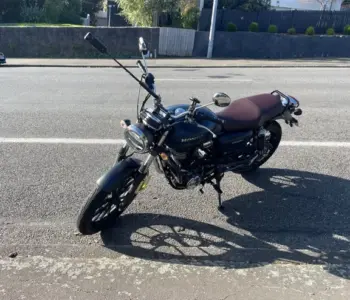
Image 20, parking downhill, view from the roadside.
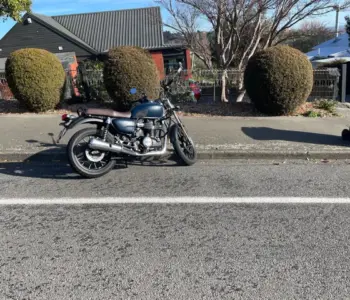
Image 21, parking downhill, view from the traffic lane.
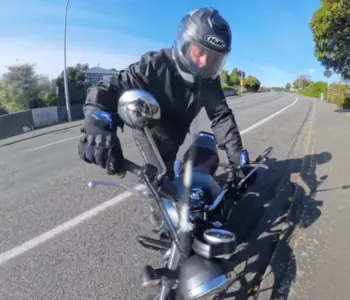
Leave a parking spot while facing downhill.

Turn your front wheel to turn towards the traffic lane, as you are facing downhill control the initial motorcycle movement with your front brake.

Once you are ready to check for traffic and move into the lane, it is no different than pulling out onto a road with level ground, progress as normal.

See the YouTube demonstration for visual reference.

Mounting the motorcycle from the right side

When the motorcycle is leaning a fair bit to it’s left but still stable to stay upright.

Sometimes you will need to mount the motorcycle from the right side so you don’t add more weight to the left side of the motorcycle when it is already excessively leaning while parked.

Just practice mounting the motorcycle from the right side and dismounting to feel the differences.

It makes sense in the worst scenarios including hill parking and uneven ground surfaces.

What is different mounting the motorcycle from the right side? 


While a motorcycle is parked on the side stand, the right foot peg is higher as the motorcycle leans towards the left side.


The left handlebar grip is also lower than the right side while parked, we use that left handlebar grip to slowly pull our body mass towards the motorcycle and over the fuel tank area before lifting the left leg over moving our full body weight onto the motorcycle when mounting from the right side.

We don’t want to upset the balance of the motorcycle by tugging hard on the right handlebar grip when mounting the motorcycle from the right side. 


Imagine its raining, dark, and the motorcycle is substantially leaning to the left while parked - you need a procedure in your head sorted before you add slippery wet foot pegs and shoes to the situation!

Practising anything helps every rider make better decisions - leave the motorcycle in gear when parked! 

Image 22, mounting a motorcycle from the right side.

Motorcycle security when parking

A note about security.


Some public parking areas are prone to theft when motorcycles are left alone for long periods of time, especially areas with low foot traffic and road access nearby.

Parking your motorcycle in the same public parking spot each day?

Choosing to park in the same public parking spot every day will be noticed by motorcycle thieves. They observe how often a motorcycle is present and for how long the motorcycle is left unattended over a short time period.

Rotate to a different motorcycle parking spot every few days or, have a secure anchor point you can chain your motorcycle to if you only have one location available when using public parking.

Cameras are not a deterrent for motorcycle thieves committed to the task.

Hats, hoodies, sunglasses, long sleeve tops and gloves make it almost impossible for a thief to be identified on camera.

Bad weather arrived?

The noise of heavy rain and wind will help the thieves hide their noise when moving or lifting a motorcycle, cutting pad locks under the cover of night. Panel vans are typically the vehicle of choice as you cannot see a motorcycle inside the van from the road side!

Looking for a motorcycle is different than lifting a motorcycle!

Motorcycle thieves typically work as a team, they will literally pickup the motorcycle and place it into a van or utility vehicle - no brake disc lock or handlebar anti-theft system will prevent that outcome, but by chaining your motorcycle to a non removable anchor point will make them think twice as it isn't as easy in public spaces and draws attention to their activity.


The complete index for guides can be found here:

https://motobasics.nz/knowledgebase-articles