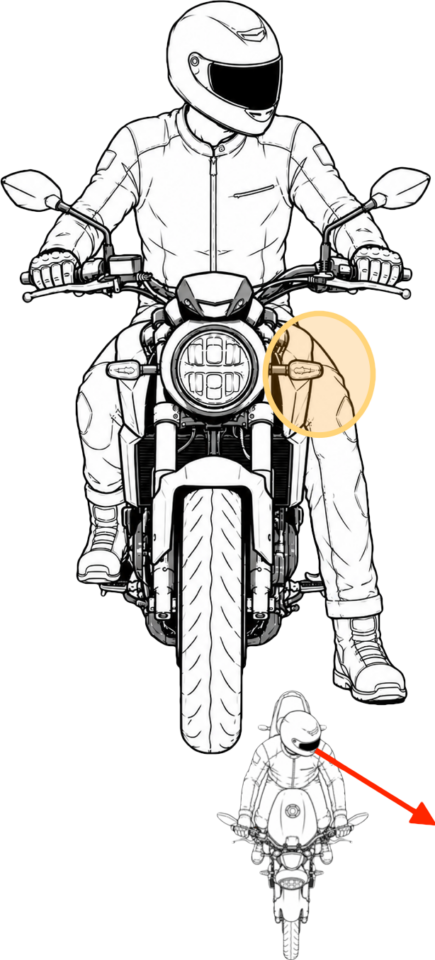
Skip to content

Head and mirror checks (Beginners)

Let's get started.

Doing head checks while moving or stationary is important, but doing mirror checks when riding a motorcycle is equally important.

Part of your licence assessment will be to identify that you are turning your head when doing road observation checks, not just moving your eyes!

Moving your head during observation checks helps you deliberately direct your attention towards the area you are checking. It also makes your observation more obvious during a licence assessment than simply moving your eyes.


See the YouTube link for additional visual references.

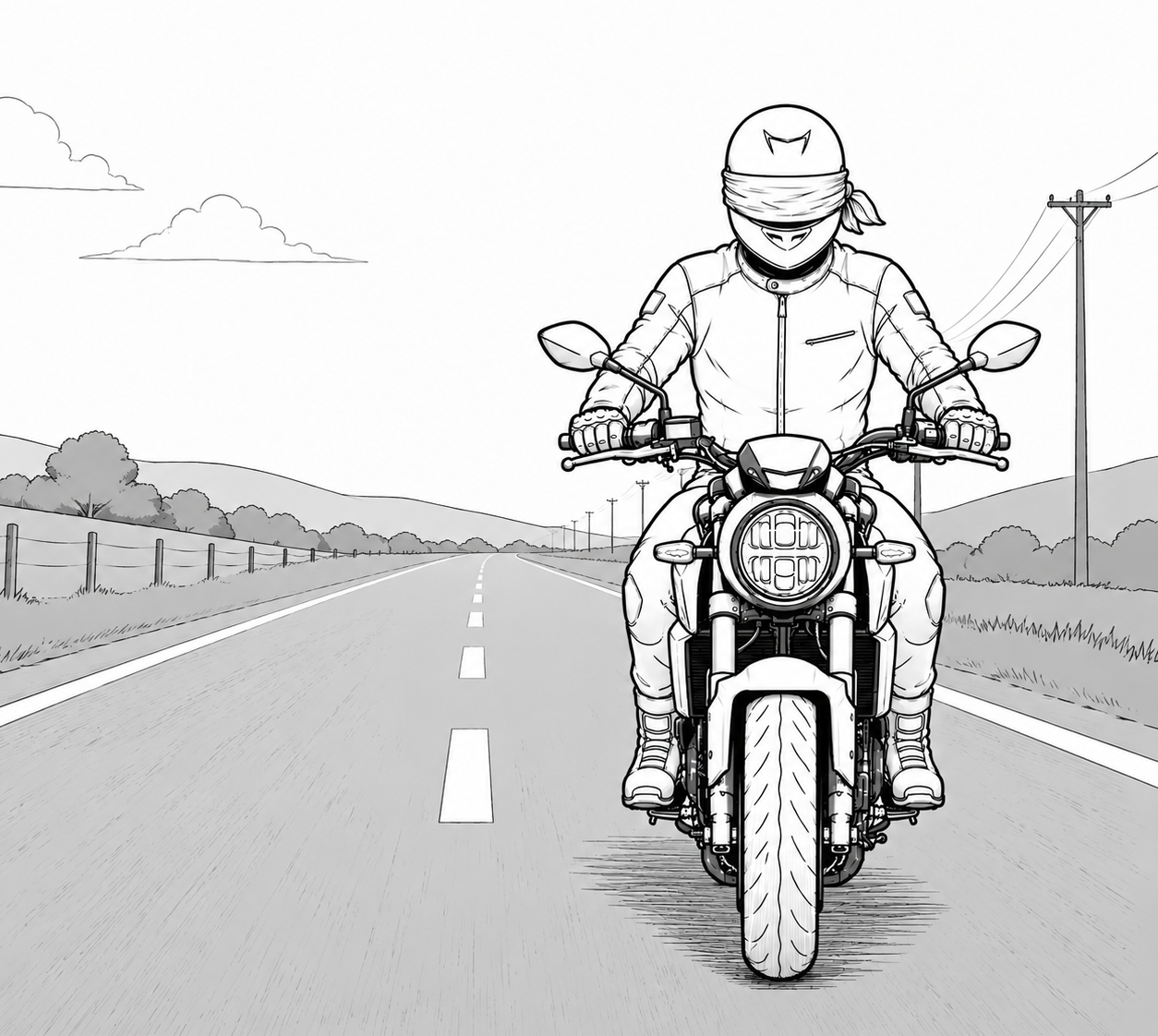
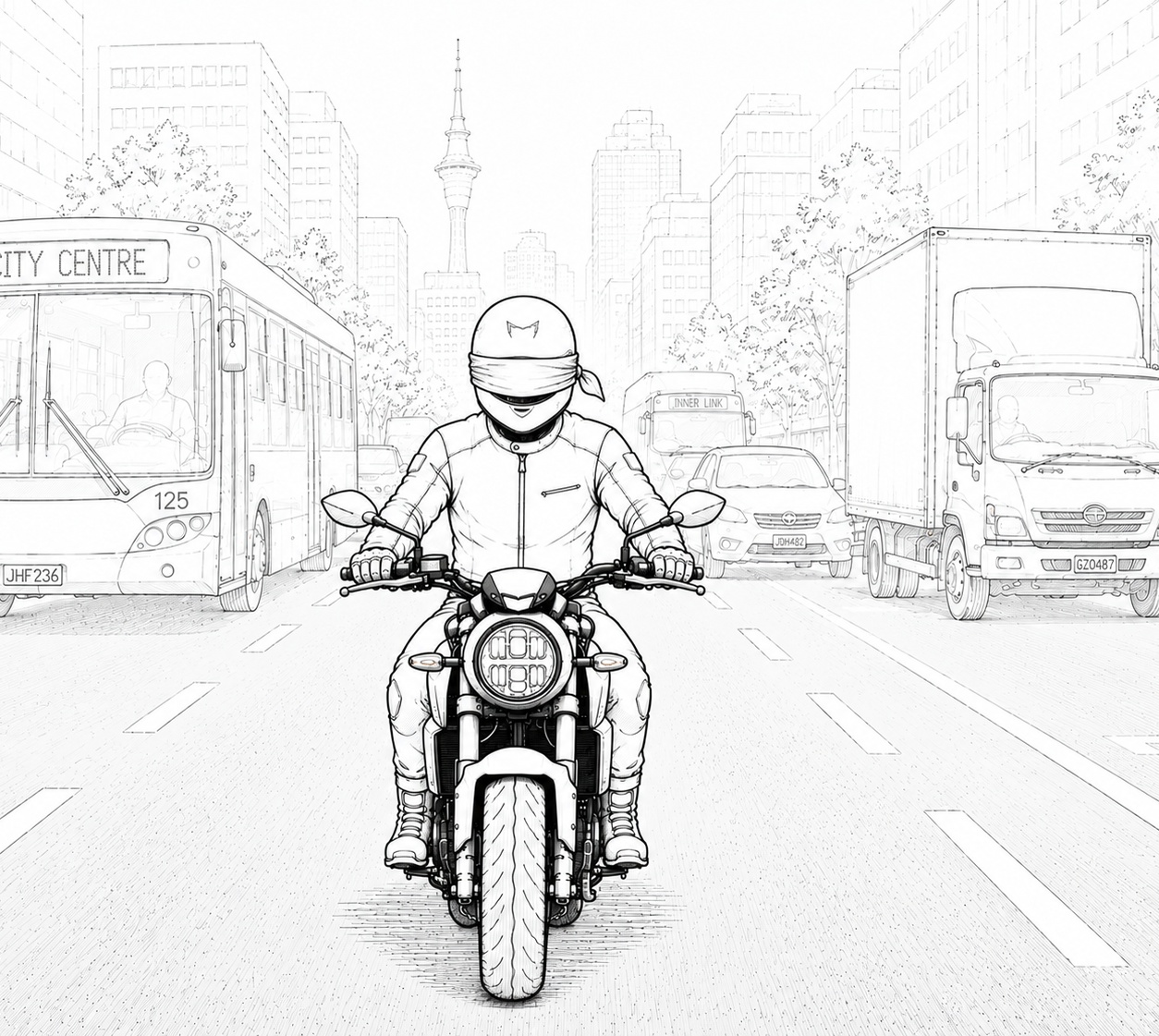
Do you ride as though you're blindfolded?

  • Riding and not even aware of your surroundings;
  • Not seeing anything but the rear bumper of the vehicle you are following.


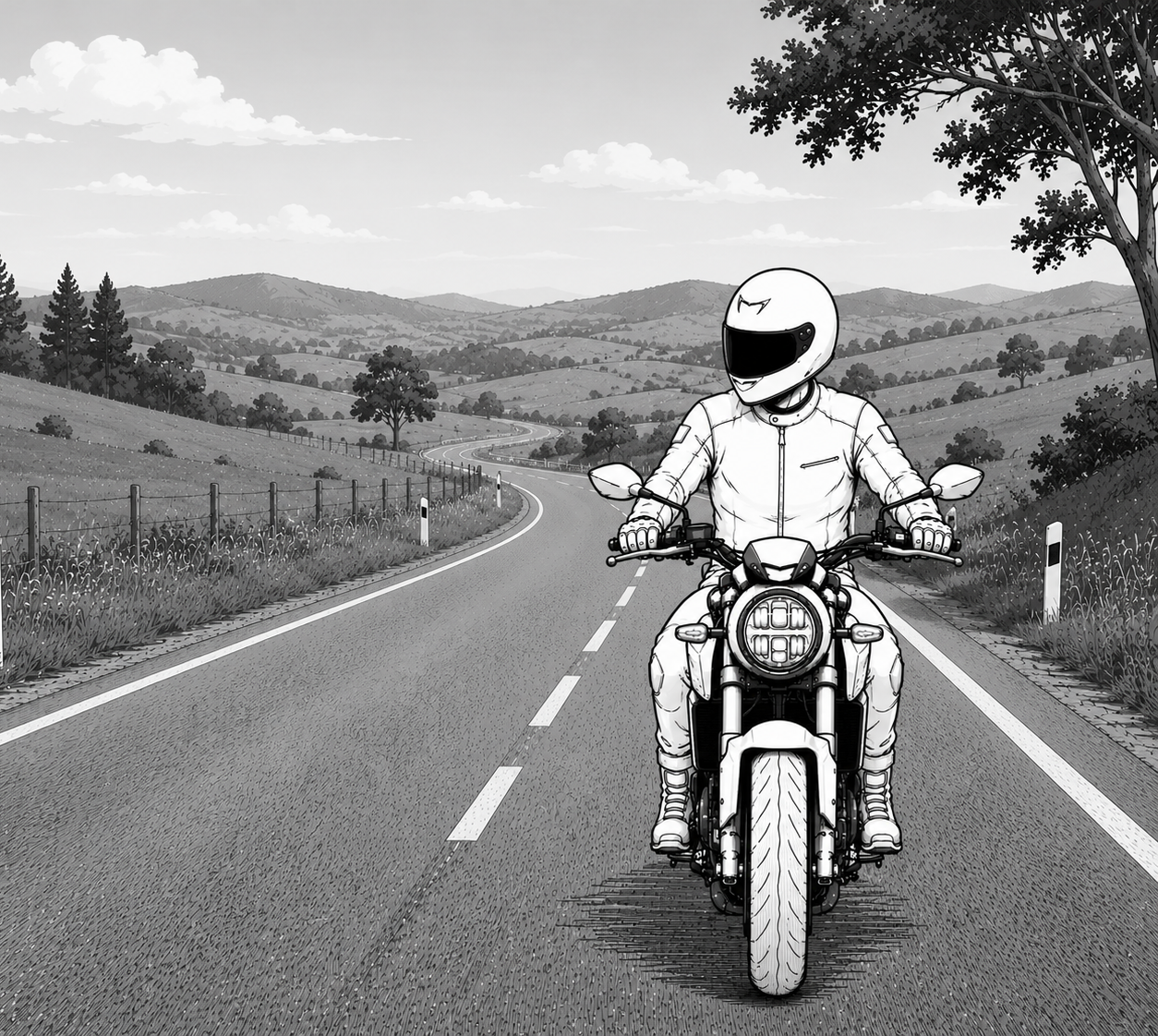
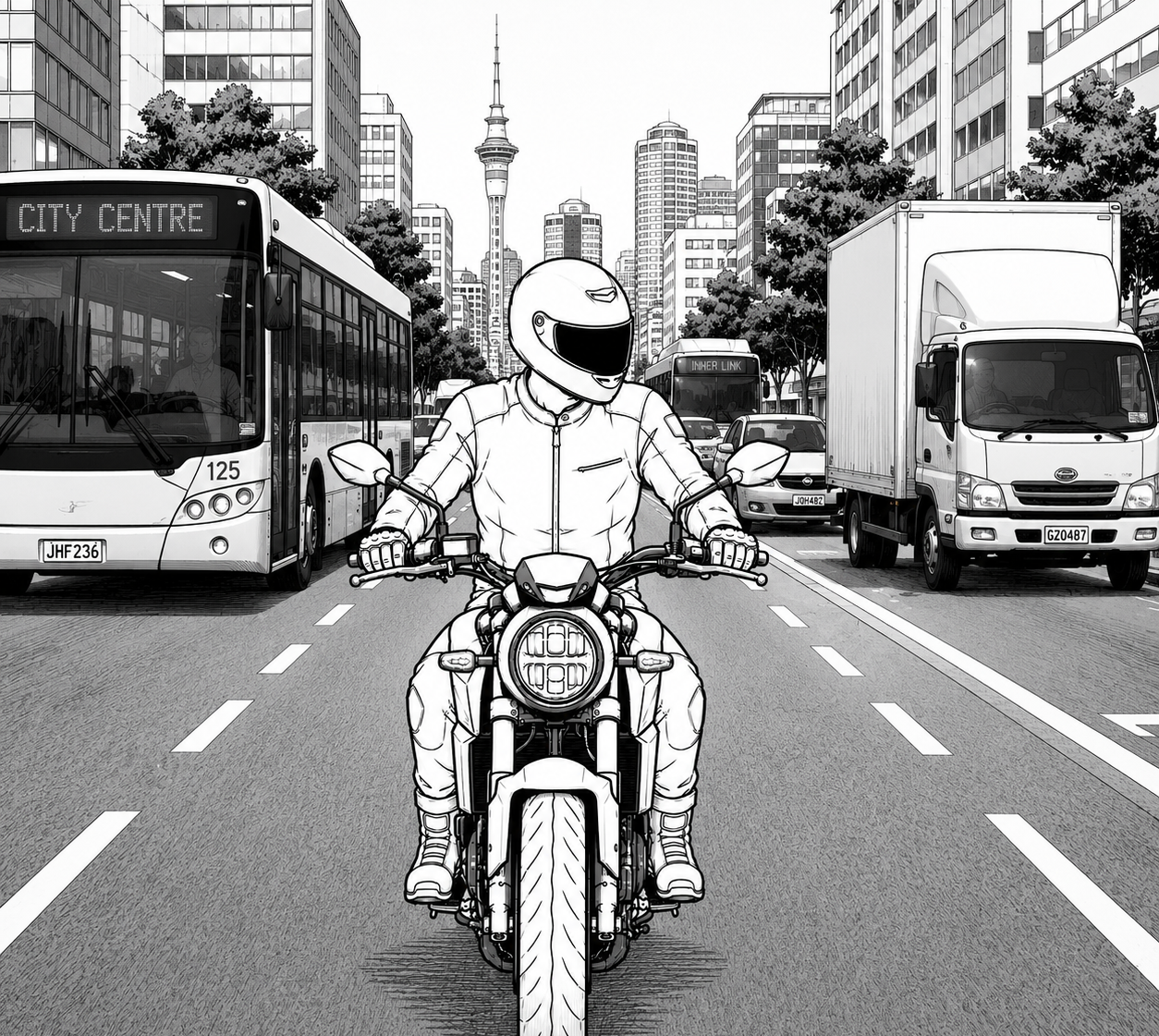
Or do you ride and know what is around you?

  • Noticed a vehicle is about to pull out of a side road ahead;
  • Noticed a vehicle approaching quickly from behind;
  • Noticed a lane merge coming up.

This article will help re-inforce rider awareness.

Rolling down the road and nothing is happening or changing?

If you have not noticed that things have changed around you, then you are not doing regular observation checks.

  • Did you notice the colour of the car behind you?
  • Is it the same car 10 seconds later or is there a big delivery van suddenly on your back wheel, how did I miss that? 

While developing the habit of scanning the road and using mirrors, use every two breaths as a simple reminder to update your road scan and mirrors when the riding as the situation allows.

As the mirrors are typically in the same position as when we scan the road ahead for side exits and obstacles, take advantage of this to scan the road right to left and then check the left mirror and then the right mirror… all in one simple head turn action!


Moto Basics speed, road scan and mirrors reminder tool, print and stick it on your dash area for easy training.

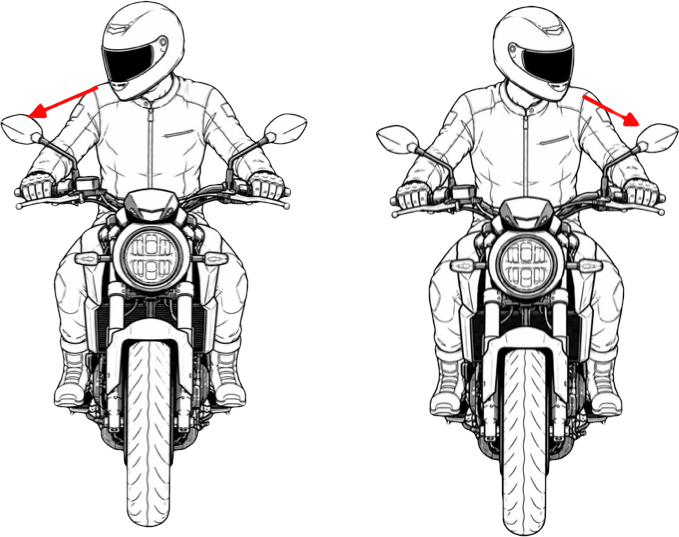
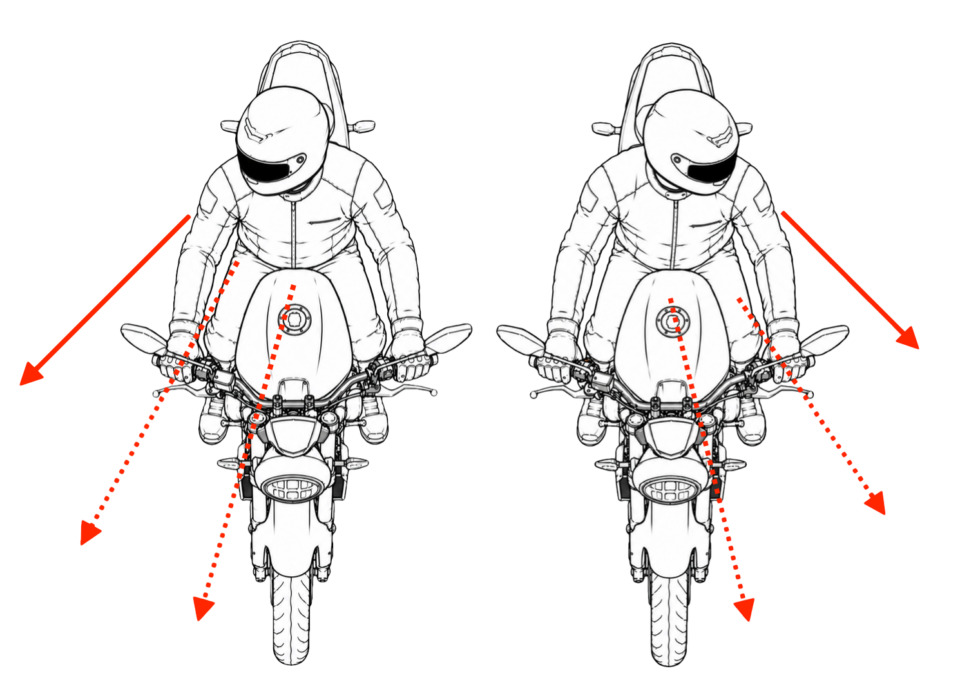
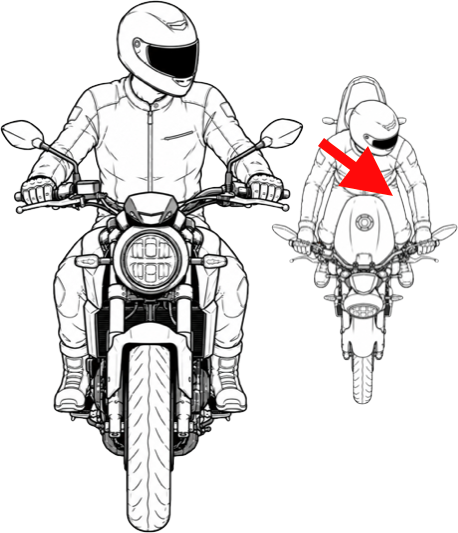
See the differences between the head check actions

Road and mirror check - Image 1.
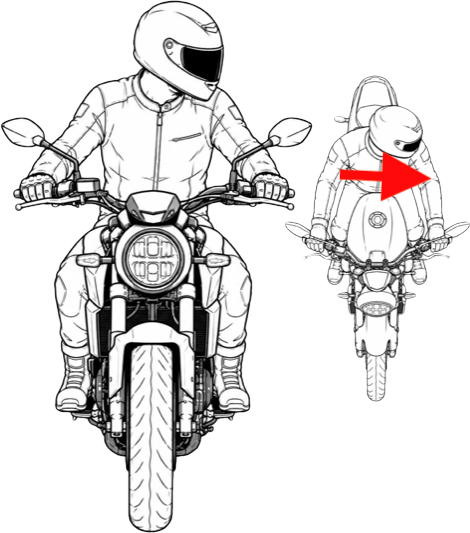
See the differences between a mirror or road-scanning check and a head check over your shoulder.

Image 1
Turning your head for a basic road scan or mirror checks.

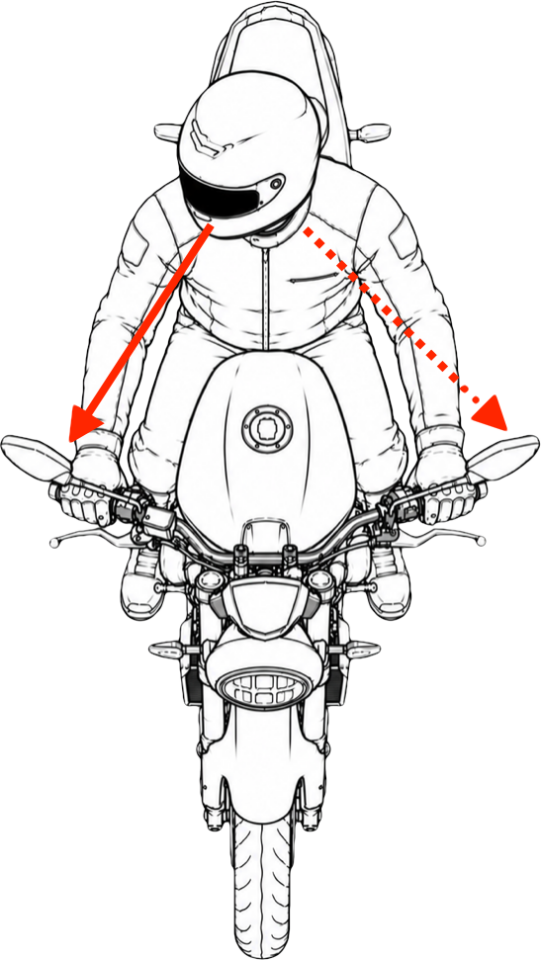
Image 2
Shoulder check, used before you change lanes or enter a side road or driveway - regardless of whether you are moving or stationary. Also known as a "lifesaver" check.

Note the pronounced extra head movement.

Shoulder check - Image 2.

Checks when slowing, stops & emergency stops

You need to observe what is behind you whenever possible.

As you ride, check what is behind you whenever you need to slow or stop, including during an emergency stop (e-stop).

  1. Check mirrors before you start slowing or stopping;
  2. Check mirrors after you slow or stop.

Knowing what is behind you when slowing or stopping can help you decide whether to remain in your intended road position or adjust your position.

If a tailgating or inattentive road user appears unlikely to stop, you have an opportunity with early observations to move safely reposition to the side of a vehicle ahead and avoid becoming the contents of a vehicle sandwich.

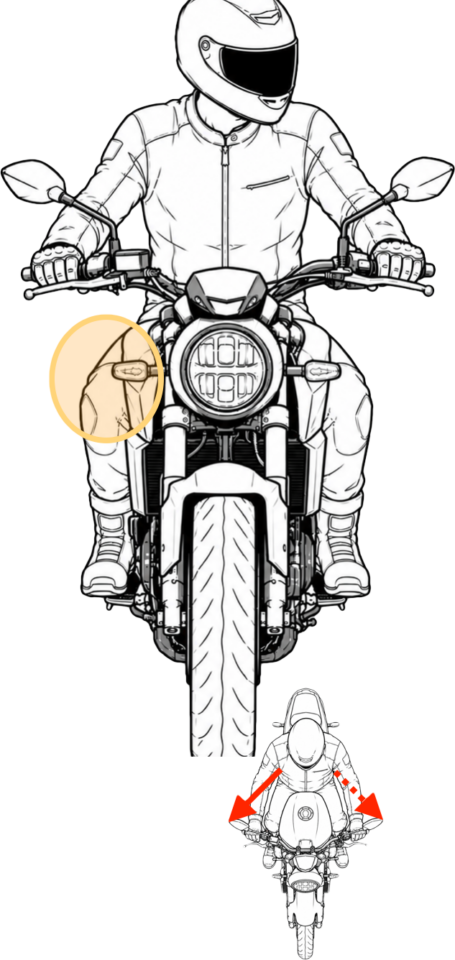
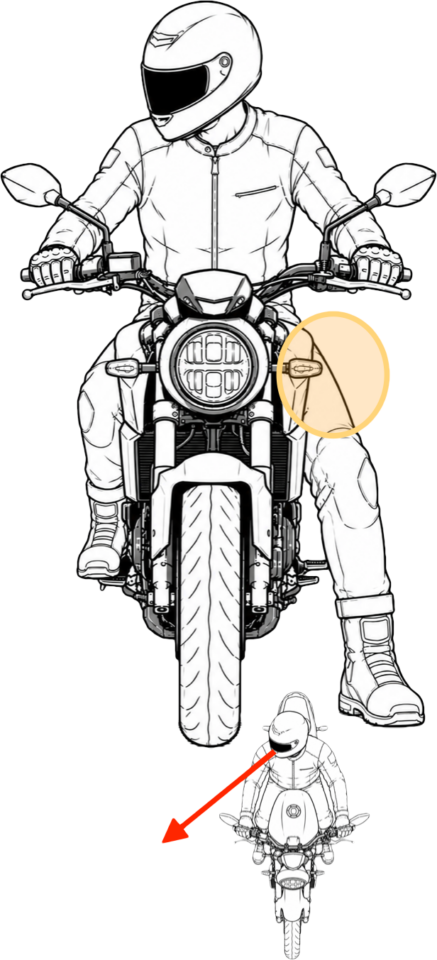
Image 3, mirror checks.

Image 3
Check both mirrors before and after slowing or stopping.

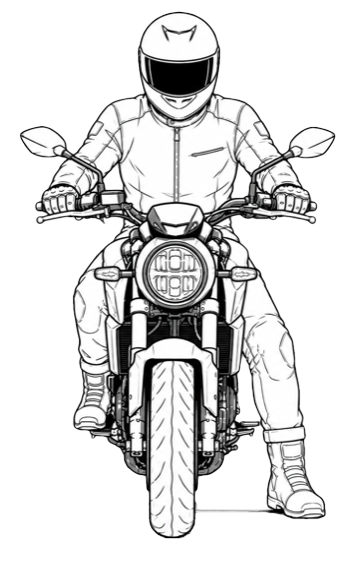
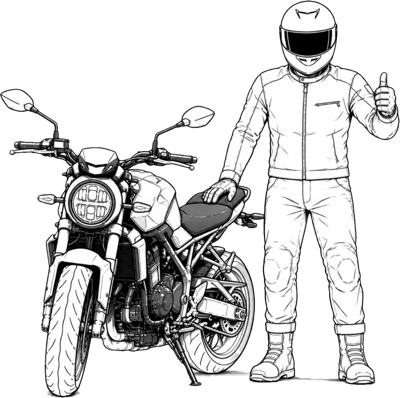
Image 4
Come to a stop if needed.

Image 4, stopped.

Tailgating vehicles behind you?

Brake a little earlier and slowly so they have the chance to see the speed changes, we cannot fix other vehicles poor road positioning or choices. Apply the 2-4 second rule when following other vehicles when moving in the same lane.

Stopped in traffic?

Keep two (2) motorcycle lengths where possible behind vehicles when stationary in traffic.

Changing lanes or entering side roads while moving

Before entering another lane, road or driveway, do your physical head checks regardless of whether moving or stationary.


Put your turn signal on and prepare for the lane change, intersection or driveway.

With your head and eyes, physically check mirrors, then scan the direction you are turning and complete a shoulder check before starting the lane change or corner manoeuvre.


Note: Check mirrors before slowing down for the manoeuvre! 

We are checking if vehicles behind us have observed our turn signals.

Image 5, mirror checks when slowing.
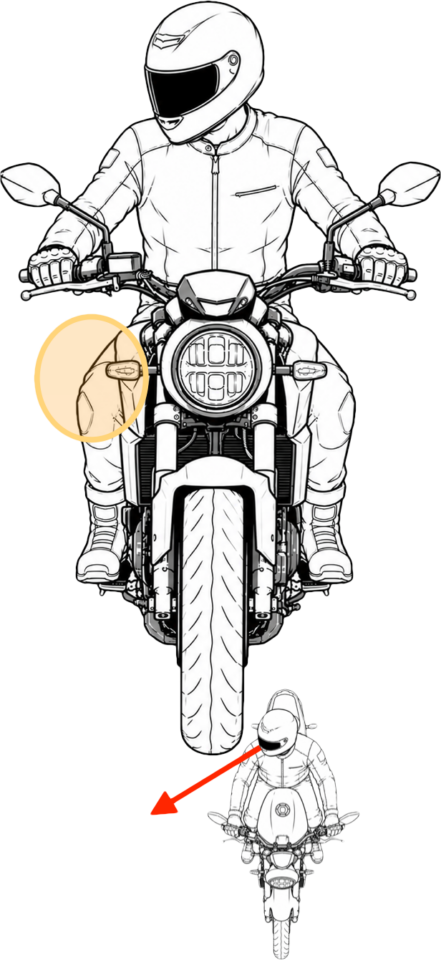
Example, entering a right turn.

Image 5
First, check both mirrors before and after slowing or stopping.

Image 6
Head check, scan area you are turning into.

Image 7
Head check over your shoulder, this is the inside shoulder side of the turn you are about to enter. Then enter the turn or lane if no obstructions exist.

Image 6, scan area you are entering.
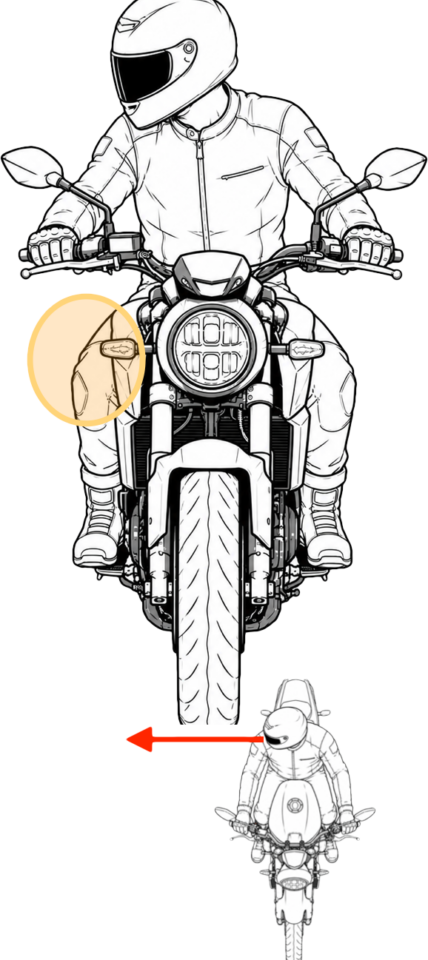
Image 7, Check over your shoulder on the inside of the turn.
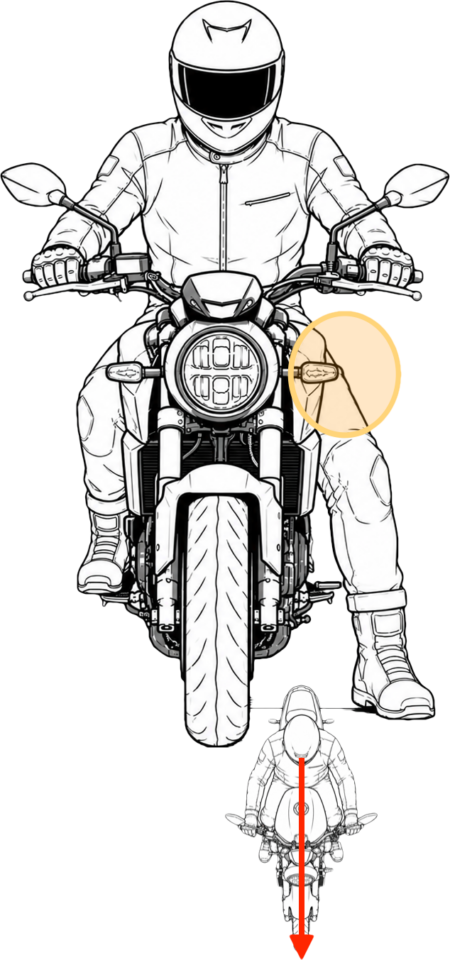
Left turns, stopped

Waiting at an intersection.

Before entering another road, lane or driveway and regardless of whether moving or stationary, do your physical head checks.

With your head and eyes, physically scan the intersection to the right, then to the left. Next, shoulder-check the inside path of the turn before completing the manoeuvre. In this scenario, this will be over your left shoulder because you are turning left.

  1. We scan the intersection in both directions as we need to make sure it is safe to proceed.
  2. Then do a shoulder check on the inside shoulder for cyclists or scooters passing on the left of our vehicle that will be traveling straight ahead.
  3. Then turn left at the intersection if safe to do so.

Note: If you are stopped waiting for traffic, check your mirrors regularly to keep you aware of what is behind you. 


Image 8, check right.
Image 9, check left.
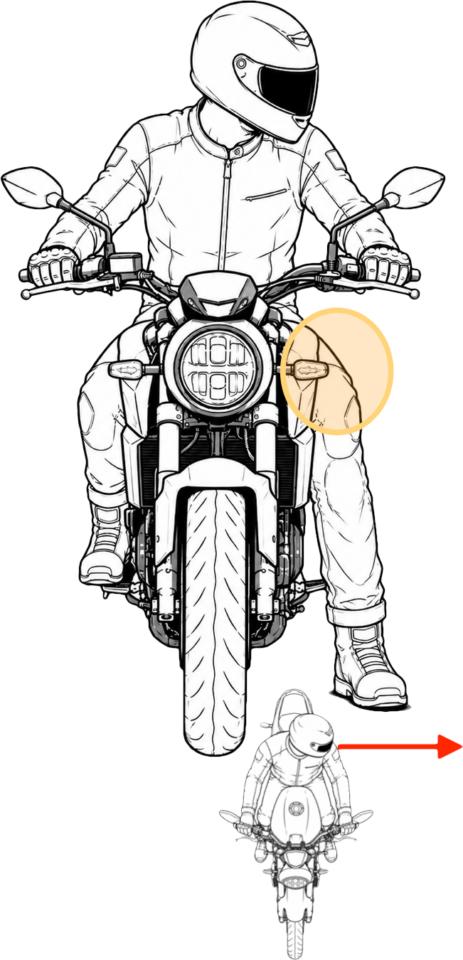
Example, stationary and turning left.

Check the intersection to be sure it is safe to enter. Look for pedestrians at pedestrian crossings and vehicles that could be crossing your path of travel; Follow road rules as required.

Image 8
Check right.

Image 9
Check left. 

Image 10
Head check over your shoulder, this is the inside shoulder side of the turn you are about to enter.

Then enter the turn if no obstructions exist.

Image 10, shoulder check left.

Right turns, stopped

Image 11, check left.
Image 12, check right.
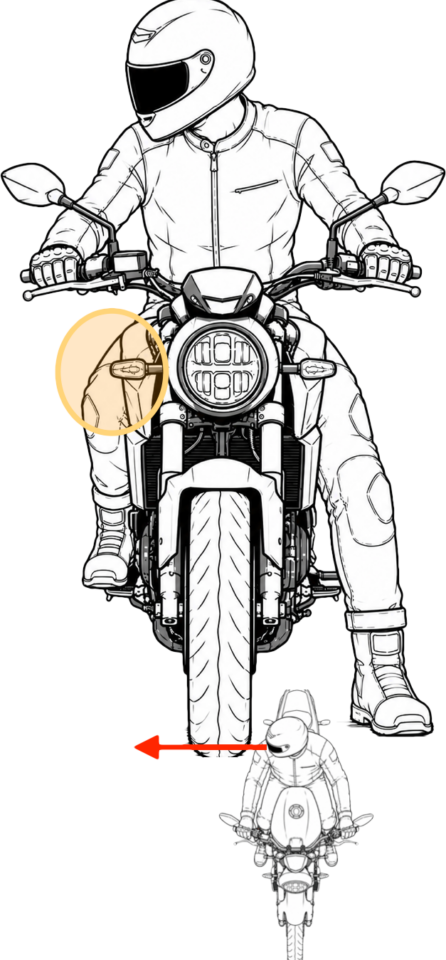
Example, stationary and turning right.

Check the intersection to be sure it is safe to enter. Look for pedestrians at sidewalk crossings and vehicles that could be crossing your path of travel; Follow road rules as required.

Image 11
Check left.

Image 12
Check right. 

Image 13
Head check over your shoulder, this is the inside shoulder side of the turn you are about to enter.

Then enter the turn if no obstructions exist.

Image 13, shoulder check right.

Scanning the road ahead

As a motorcycle rider, you create more free time to plan any actions required by simply scanning the road ahead regularly.


This includes common items like scanning for entrances and exits for malls, fuel stations, residential areas, railway crossings and all intersections regardless of whether you are going straight ahead. 


Knowing what is happening around you makes life easier and then you can take action early without stress or panic reactions.


Scanning ahead works well when combined with the 2-4 second rule when following other vehicles, otherwise you may find you are the cause of preventable near-miss events you experience as a rider when you are not aware of what is happening around you.

Image 14, scan both roadsides.

Example, scanning the road + mirror checks.

Image 14
Scan the roadsides, sweep your head from one side of the road to the next. 

Image 15
On the return head sweep, observe your mirrors.

Update your speed and road position based on information you have observed. 

Image 15, check mirrors.

Your primary focus is on what events are changing in front of you.

But as time allows, keep scanning the road sides every two (2) breaths and check your mirrors.

You can scan right, left, right or left, right, left, but the result is the same -improved positional awareness!

See the guide for the positional focus map: https://motobasics.nz/knowledgebase-articles/guides/guide-positional-focus-map

Summary, scanning and mirrors

While riding a motorcycle, there might be opposing traffic, parked cars, potholes, side streets and obscured driveways.

To be able to scan ahead successfully, you need to ride on the road in a position that is not obscured from other road users.

Don't ride next to parked cars like a cyclist would; Move into the center of the lane you are using.

Progress with traffic, keep your space buffer from the vehicle in front by using the 2-4-second rule.

If you follow another vehicle too closely, more of your attention is consumed by monitoring that vehicle and maintaining your distance. This reduces the time available to scan farther ahead and maintain awareness of the wider road environment.


The complete index for guides can be found here:

https://motobasics.nz/knowledgebase-articles