Motorcycle, prevent engine stalling (Beginners)
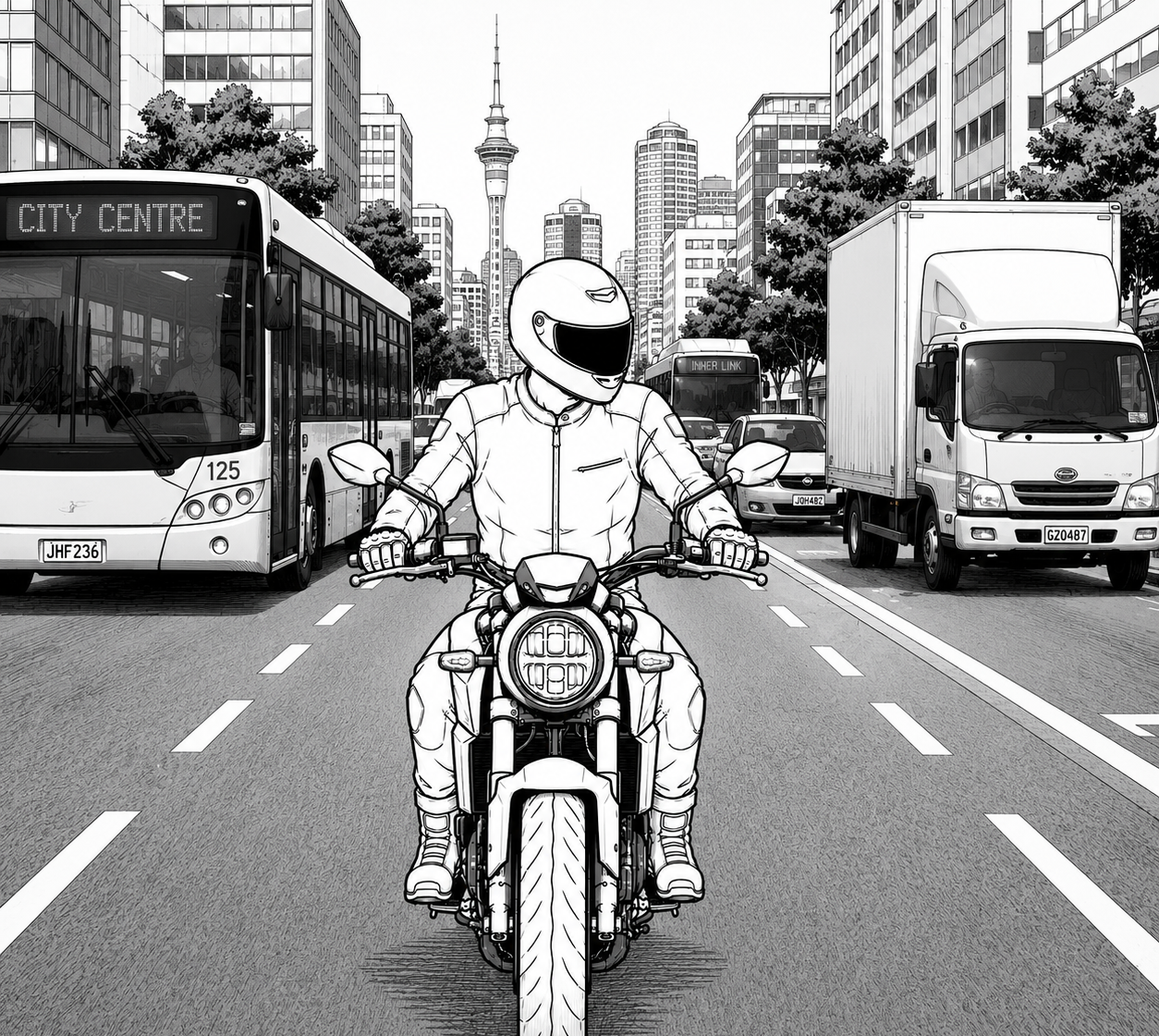
There is a lot of noise created on public streets that will over power the noise of a standard motorcycle engine and trying to prevent the engine stalling by listening for the sound of your engine alone is not a reliable method.
Some riders also rush the take off without understanding the clutch friction zone, and this will also cause engine stalling.
The trucks and cars near a motorcycle rider can generate a lot more noise than what a learner has experienced when learning the throttle and clutch in a quiet car park. Another motorcycle next to you night be louder than other vehicles around you combined so sound alone is not the right way gauge your engine readiness to take off from a stand still.
You need to twist a small amount of throttle every-time, keep it and then engage the clutch smoothly.
Steps to prevent engine stalling?
- We use a set (small) amount of throttle every time before we take from a stationary position;
- As we add the clutch friction zone, the throttle can stay as-is with the right amount of throttle already set (1);
- Use the friction zone to get the motorcycle moving from a stand still, once you are moving a half a metre or so, then release the clutch slowly past the friction zone completely and put all fingers back on the handlebar grip when not using the clutch lever.
At any stage when needed, we may choose to stop the motorcycle using the brakes, disengage the clutch and roll off the throttle. (Both hands used, pull clutch and brake levers)
Lever reach - Using one, two, three or four fingers?
The actual clutch friction zone and dis-engagement of the clutch happens in a short distance of the total clutch lever movement, typically this friction zone and engagement area is felt closer to the mid-to-end-area of the clutch travel, pulling the clutch lever all the way to the handlebar grip is not required to use the clutch properly.
Many people are taught to use the full four (4) fingers with the clutch lever and the brake lever for emergency stops, and this is essential for gaining the maximum leverage required.
But when your not aggressively trying to stop, we need smooth control at all other times when operating a motorcycle and how we grab the control levers is part of our smoothness with the motorcycle.
It is really down to each rider as to their own preference but there is a element of control and comfort that does affect how you use the control levers.
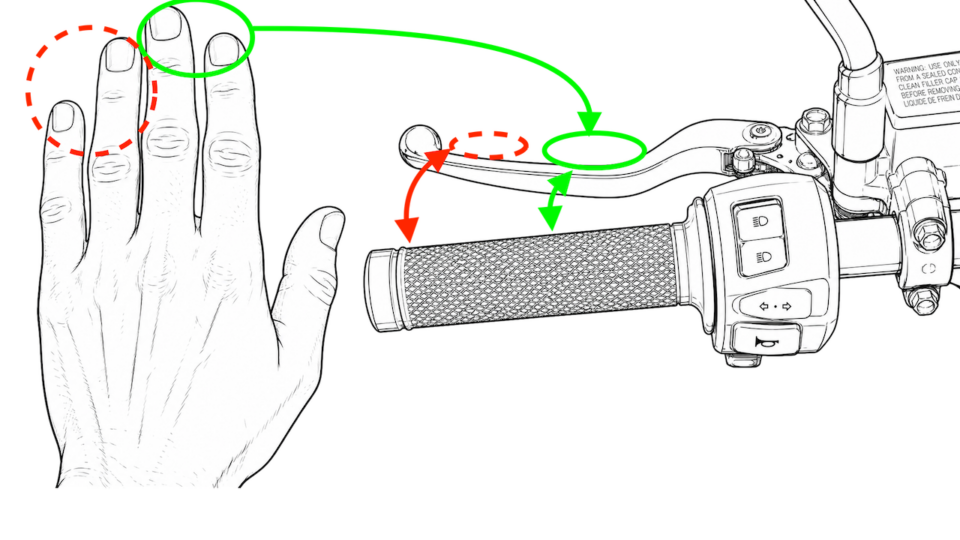
For most motorcycles, we recommend two or even three fingers for the clutch and brake lever as normally they are our longest fingers to give us the most leverage while the pinky finger is often too short to reach the lever easily for smooth controls.
See the image, green is easy to reach, red is hard or uncomfortable to reach.
Also note how the lever has a dip in its design (as highlighted in green), the purpose is designed for leverage but it does make it easier for the first two fingers to reach the lever.
Throttle movement - Before the clutch is used
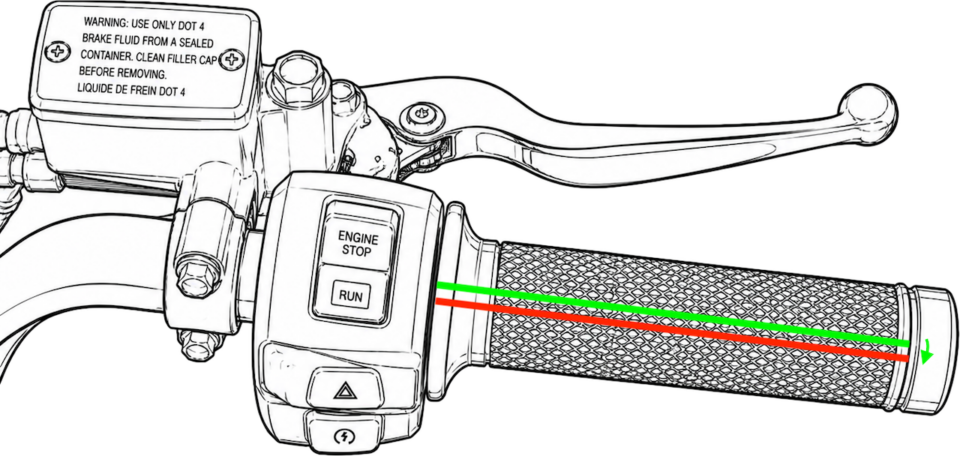
Practice adding a automatic small amount of throttle twist for every start… Remember, it is the clutch that engages the engine power.
Some motorcycles make a lot of engine noise with the smallest amount of throttle added but once you start to use the clutch friction zone, the weight of the motorcycle is being partially loaded and the engine revs will slow down due to that weight being applied (This is why we only apply a small amount of throttle held in position for new rider safety and training).
Don’t rush the clutch past the friction zone, use the friction zone to get moving and only once the motorcycle is moving more than half a metre forward should you should then commit to releasing the clutch slowly past the friction zone (fully engaged = no fingers on the clutch lever).
Once the clutch is engaged, only then decide to progress further with your situation (traffic, intersections etc).
If at any time you take off without an adequate throttle amount, learners risk adding to much throttle at the wrong time to compensate for the initial throttle laziness applied and possibly by mismanaging clutch (rushing the friction zone, releasing the clutch lever quickly) end up stalling the engine or lifts the front wheel - not in control!
Clutch control - Friction zone feel
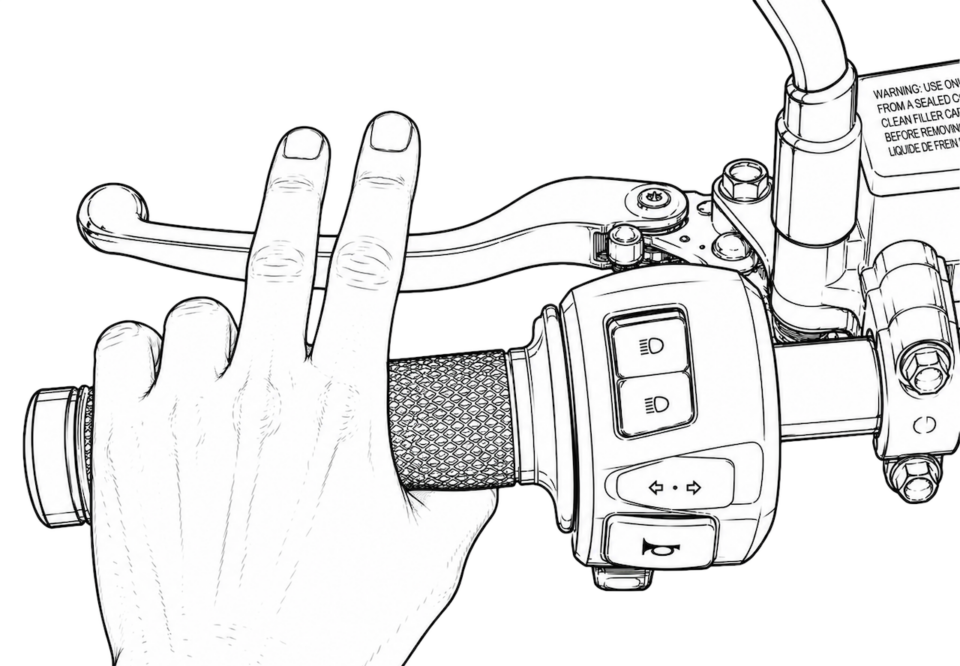
The clutch friction zone adds motive power to the rear wheel but does so with a "slipping effect". You can hear the engine speed (revs) do not match the speed of the motorcycle.
The primary reason to use a set and held amount of throttle is to allow the rider to modulate the clutch lever easily, changing throttle and clutch lever simultaneously will produce many different outcomes and new riders may not understand what is going wrong (ie not smooth, stalling, lurching forward, engine chugging)
Clutch control, we know that when we use four fingers, this involves using our little pinky finger but that specific finger has the least amount of reach and as result affects fine control when feeling the friction zone.
With a throttle hand set and ready, all that is needed now is to use the clutch friction zone smoothly and often when using the pinky finger the sensitivity to the friction zone is missed.
Try only using the two fingers as shown when using the clutch lever, they have the most movement, leverage available and sensitivity with the way the control levers are designed.
Use the friction zone to get the motorcycle moving from a stand still, once you are moving a half a metre or so, then release the clutch slowly past the friction zone completely and put all fingers back on the handlebar grip when not using the clutch lever.
! ! Wear gloves while riding a motorcycle, illustrations are for demonstration purposes only !!
Clutch control - Turning from a stationary position
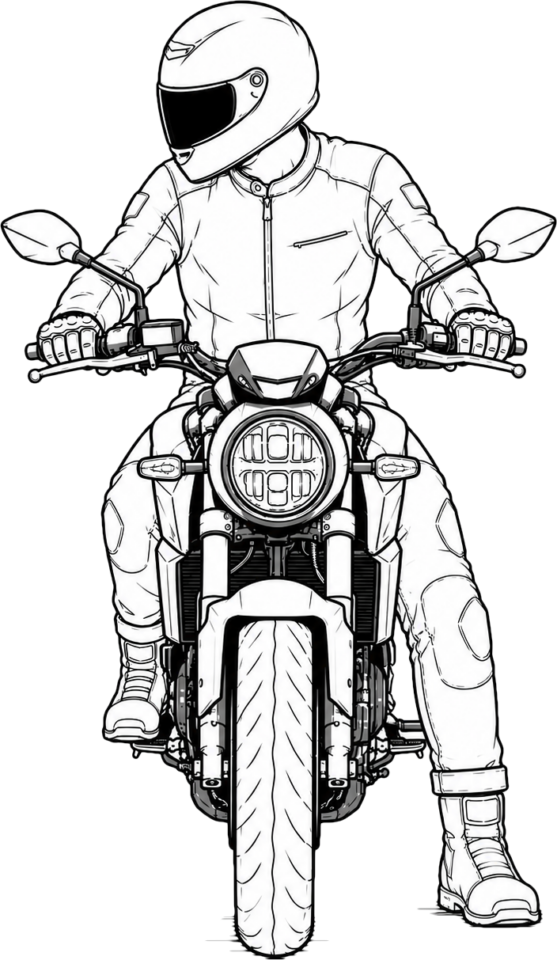
If you need to do a u-turn or take a sharp turn from a stationary position, the procedure of using a set amount of throttle and using the clutch friction zone to move the motorcycle is used but as your are needing to do a turn...
- Keep using the friction zone through the entire turn, supplement the turn manoeuvre the with rear brake as needed;
- Only release the clutch past the fiction zone once the turn is actually completed and traveling straight ahead;
- Once traveling straight, then progress forward.